When considering material handling solutions, the choice between three-wheel and four-wheel forklifts is crucial. Both types offer unique advantages tailored to specific operational needs. However, the decision often hinges on specific operational environments and tasks.
What is the difference between 3-wheel and 4-wheel forklifts? Three-wheel forklifts are designed for tight spaces. They provide excellent maneuverability and are ideal for indoor use. Their compact design allows them to navigate narrow aisles effectively. On the other hand, four-wheel forklifts offer enhanced stability. They are better suited for outdoor applications and heavy loads. The added wheel provides better weight distribution and traction.
Understanding these differences is vital for making an informed choice. Each forklift type serves distinct purposes. Evaluating your operational requirements will lead to better efficiency. While three-wheel models excel in agility, four-wheel units dominate in stability. Choose wisely, as the right forklift impacts productivity and safety. Reflecting on your specific needs can pave the way for improved operations.
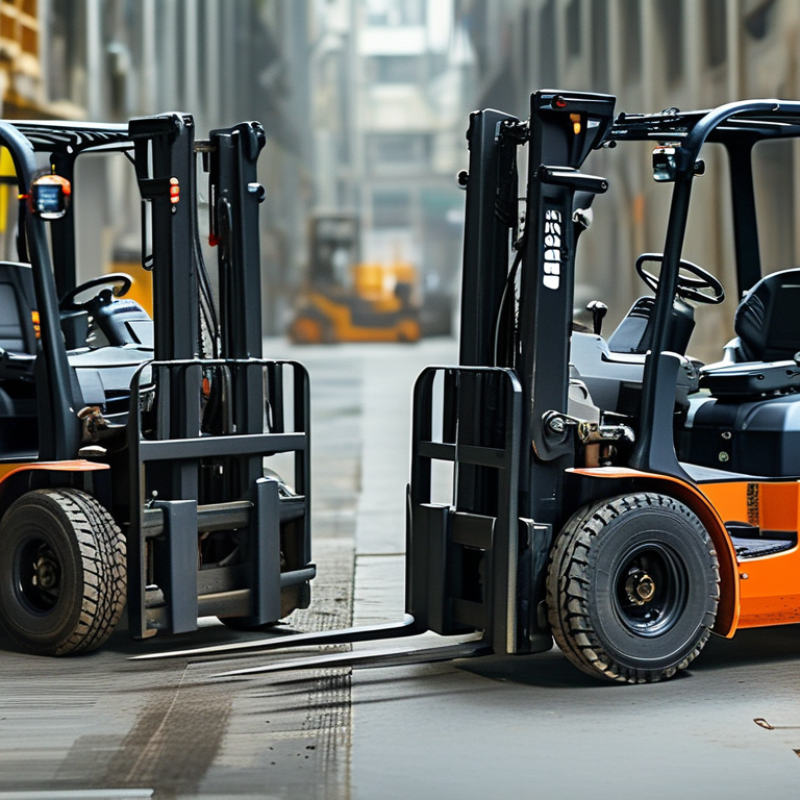
Comparison of Stability: 3 Wheel vs 4 Wheel Forklifts in Logistics
When comparing the stability of 3 wheel and 4 wheel forklifts, several key aspects emerge. 3 wheel forklifts are compact and agile. Their design allows for tight turning in narrow aisles. However, they may struggle on uneven surfaces. The lack of a fourth wheel can make them less stable when carrying heavier loads.
In contrast, 4 wheel forklifts provide superior stability. Their four-wheel design distributes weight more evenly. This makes them ideal for outdoor use and rough terrain. While they are less agile, they excel in safety and load capacity. In busy warehouse environments, their reliability cannot be overlooked.
**Tips:** Always evaluate the specific needs of your operation. Consider the types of surfaces you’ll be moving on. Test both styles if possible. Remember, what works best for one application may not suit another. Stability should always come first in your decision-making process, especially in high-risk environments.
Maneuverability in Tight Spaces: The Advantage of 3 Wheel Forklifts
In tight spaces, maneuverability is key. Three-wheel forklifts excel in this aspect, making them ideal for constrained environments. According to industry data, 3-wheel models can turn within a radius of just 48 inches. This capability allows operators to navigate narrow aisles and crowded warehouses effectively.
Operators often appreciate the compact design of three-wheel forklifts. These machines usually weigh less, allowing for easier handling and swift movements. A 2022 report from the Material Handling Industry Association noted that 3-wheel forklifts can increase productivity by up to 20% in tight spaces compared to their four-wheel counterparts. This statistic highlights their suitability for busy facilities where every inch matters.
However, some challenges exist. Stability can be a concern, particularly when lifting heavier loads. Operators need to carefully assess the balance to prevent tipping. While three-wheel forklifts shine in maneuverability, they may lack the robustness required for larger, demanding operations. Thus, it’s important to evaluate the specific needs of your operation before choosing between the two types.
Load Capacity Analysis: 3 Wheel vs 4 Wheel Performance Metrics
When considering load capacity, 3 wheel and 4 wheel forklifts offer different performance metrics. 3 wheel forklifts excel in tight spaces. They typically have a lower turning radius, making them ideal for warehouses with narrow aisles. According to industry reports, their lifting capacities often range from 3,000 to 5,000 pounds. This impressive agility allows for better load handling in constrained environments.
In contrast, 4 wheel forklifts generally provide higher stability. Their larger base supports greater weight, frequently accommodating loads up to 15,000 pounds. This increased load capacity can be advantageous in more open settings, such as outdoor construction sites. However, their larger turning radius can hinder efficiency in tight spaces. A study by the Material Handling Industry of America (MHIA) highlights how 4 wheel models often result in longer maneuvering times, suggesting that users should evaluate their specific environments carefully.
Despite their strengths, both types have drawbacks. 3 wheel models may struggle with uneven surfaces due to their lighter design. Meanwhile, 4 wheel forklifts, while strong, are often bulkier. Users must weigh these factors when deciding on the right fit for their operations. The right choice hinges on balancing load needs against operational constraints.
2026 Best 3 Wheel vs 4 Wheel Forklifts Load Capacity Analysis
Cost Efficiency: Operational Expenses for 3 Wheel and 4 Wheel Forklifts
When comparing 3 wheel and 4 wheel forklifts, cost efficiency is crucial. Operational expenses can vary significantly between the two options. 3 wheel forklifts often have lower initial purchase costs. They are typically more maneuverable in tight spaces, which reduces labor time. However, ongoing maintenance costs can be higher due to their advanced steering mechanisms.
4 wheel forklifts provide better stability and load capacity. While they may have a higher upfront cost, they can be more durable, leading to reduced long-term expenses. Their stability is beneficial in outdoor settings. But, they require larger turning radii, which may lead to inefficiencies in smaller areas.
Tips: Consider your specific operational needs. Analyze the environments where the forklifts will operate. It’s wise to calculate the total cost of ownership, including fuel, maintenance, and potential downtimes. Finally, evaluate your workforce's training needs, as this can affect overall efficiency. Balancing initial investment with long-term savings is essential for optimal decision-making.
Safety Features Assessment: How Each Type Performs Under Stress
When comparing 3-wheel and 4-wheel forklifts, safety features often take center stage. According to industry reports, 3-wheel forklifts excel in maneuverability but can be less stable under stress. This can lead to a higher risk of tipping, especially on uneven surfaces. In contrast, 4-wheel forklifts offer superior stability, making them safer for heavy loads and challenging environments.
A recent safety assessment indicated that 4-wheel models had a lower incident rate of accidents during operation. Studies found a staggering 40% reduction in tip-over risks when using a 4-wheel forklift compared to their 3-wheel counterparts. However, operators must remain vigilant. Even the safest equipment can pose risks if not handled correctly.
**Tip:** Always perform a pre-operation check before use. Inspect tires, brakes, and safety features to ensure optimal performance. Operator training also plays a crucial role in minimizing accidents. Ensure that all personnel are adequately trained in handling the specific type of forklift they will operate. Regular training updates can enhance safety awareness and skills.
FAQS
: 3-wheel forklifts excel in maneuverability, allowing easy navigation in tight spaces. They can turn within a radius of 48 inches.
They can boost productivity by up to 20% in confined areas, according to industry reports.
Stability can be a concern, especially when lifting heavier loads. This increases the risk of tipping.
4-wheel forklifts offer superior stability and are safer for heavy loads in challenging environments.
They show a 40% lower incident rate for accidents, particularly related to tip-over risks.
Proper training minimizes accidents. Even the safest equipment can be dangerous if not handled correctly.
A pre-operation check of tires, brakes, and safety features is essential for optimal performance.
They may lack the robustness for larger operations. It's crucial to evaluate specific operational needs.
Yes, the risk of tipping increases on uneven surfaces. Vigilance is required during operation.
The compact design of 3-wheel forklifts aids in swift movements and easy handling in constrained spaces.
Conclusion
In the discussion of "What is the difference between 3-wheel and 4-wheel forklifts?", several key factors emerge that influence the choice of forklift in logistics. Firstly, stability is a primary consideration, with 4-wheel forklifts generally offering superior support, making them preferable for heavier loads. However, 3-wheel forklifts excel in maneuverability, particularly in tight spaces, allowing for greater flexibility in warehouses and small environments.
Furthermore, load capacity analysis reveals that while 4-wheel models tend to handle larger weights effectively, 3-wheel forklifts can be more efficient in handling lighter loads. Cost efficiency also plays a crucial role; 3-wheel forklifts often incur lower operational expenses due to reduced maintenance costs. Lastly, safety features are essential, with both types designed to perform under stress, yet their effectiveness can vary based on design and application. Understanding these differences can significantly impact operational efficiency and safety in logistics operations.

 Titan Forklift