Top Automated Warehouse Equipment Trends for Global Buyers

Time:2026-10-13 Author:Ethan
0%

Global warehouse operators are moving from isolated automation projects toward connected, data-driven systems. What are the latest trends in automated warehouse equipment? The answer now includes autonomous mobile robots, shuttle systems, robotic picking arms, smart conveyors, machine vision, and warehouse control software.

The International Federation of Robotics reported 541,302 industrial robots installed worldwide in 2023. Its World Robotics 2024 report also recorded more than 4.28 million robots operating globally. These figures do not represent warehouse equipment alone, but they show the wider automation direction. DHL’s 2024 Logistics Trend Radar highlights artificial intelligence, robotics, computer vision, and autonomous operations as important logistics trends. MHI’s 2024 Annual Industry Report also identifies robotics and automation as major investment priorities for supply chain leaders.

Speed matters.

However, global buyers should avoid treating every new machine as a guaranteed solution. A robotic picking arm may improve throughput, yet poor carton presentation can reduce its accuracy. An AMR fleet may shorten travel time, while weak Wi-Fi, narrow aisles, or unclear safety zones create delays. These practical details often matter more than impressive demonstrations.

This guide examines the equipment trends shaping modern warehouses, including goods-to-person systems, high-density storage, AI-enabled software, and flexible robotic platforms. It also considers installation requirements, labor interaction, maintenance access, integration costs, and measurable return on investment. Industry reports provide useful direction, but warehouse experience remains essential. Forecasts can be optimistic. Real sites are less forgiving. Reliable decisions require tested workflows, transparent supplier data, and performance checks after deployment.
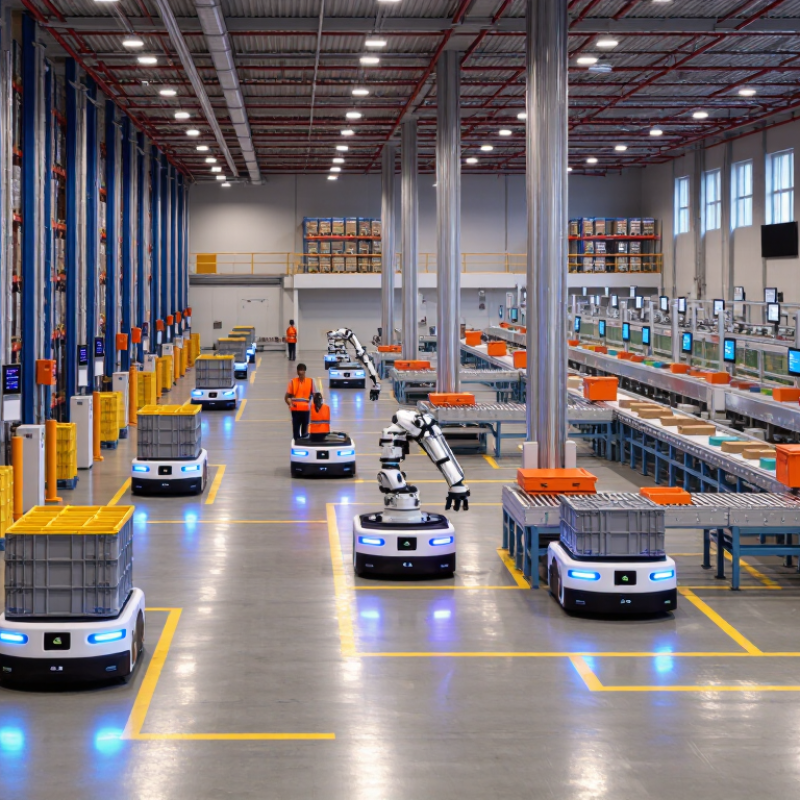
Top Automated Warehouse Equipment Trends for Global Buyers

What Automated Warehouse Equipment Means for Global Buyers

For global buyers, automated warehouse equipment is more than a productivity upgrade. It changes how goods move, workers interact, and managers make decisions. A shuttle system can place cartons within seconds. Mobile robots can carry loads across long warehouse aisles. At 2 a.m., this consistency becomes valuable. It reduces repetitive handling and supports round-the-clock operations.

The strongest projects begin with order profiles, not attractive catalogs. Not with a catalog. Buyers should measure SKU variety, peak volumes, package sizes, and available floor space.

Current trends favor modular systems, intelligent storage, and connected control software. Autonomous mobile robots offer flexible movement when warehouse layouts change. Automated storage systems increase vertical use, especially where land costs remain high. Vision sensors and real-time dashboards improve inventory accuracy. Energy efficiency also matters. Regenerative drives, lighter equipment, and smart charging can reduce operating costs.

However, automation cannot repair poor inventory data. That lesson is easy to overlook.

Global buyers must examine voltage standards, floor flatness, climate conditions, and local service capacity. Dust, humidity, or uneven flooring can affect reliability. Local technicians matter. Training matters too. In practical warehouse evaluations, integration problems often appear after installation, not during demonstrations.

No system is perfect. A fast machine still fails when maintenance access is difficult. Procurement teams should request failure records, spare-parts plans, safety documentation, and realistic performance tests. Ask for evidence.

Key Equipment Categories in Modern Automated Warehouses

Top Automated Warehouse Equipment Trends for Global Buyers

Modern automated warehouses are built from connected equipment, not one spectacular machine. Automated storage and retrieval systems provide dense, repeatable storage for pallets, totes, and cartons. Conveyors and sortation units then move orders through packing zones, often at stable speeds.

MHI’s 2024 Annual Industry Report found that 55% of supply chain professionals planned to increase technology investment, showing continued demand for practical automation.

Mobile robots, including autonomous mobile robots and automated guided vehicles, support flexible transport between storage, picking, and dispatch areas. Robotic picking systems handle repetitive movements, while machine vision checks item position and package condition.

Interact Analysis reported that the global warehouse automation market is expected to approach 40 billion dollars by 2027. The forecast is useful, but buyer decisions should still begin with throughput, SKU variety, floor loading, and labor availability.

The control layer matters just as much. Warehouse execution software, barcode scanners, sensors, and digital dashboards coordinate equipment and reveal delays. The World Robotics 2024 report from the International Federation of Robotics recorded more than 500,000 industrial robot installations in 2023, reflecting broader confidence in robotic systems.

Yet automation is not automatically efficient. Poor data creates fast mistakes. A narrow aisle may improve density but restrict maintenance access. I have seen projects overvalue peak speed and underestimate replenishment work. That trade-off deserves closer testing before equipment selection.

How to Evaluate Automation Technologies Across Different Markets

Global buyers are assessing more than faster conveyors or taller storage systems.

They are comparing technologies against local labor costs, building layouts, energy prices, and service capacity. A shuttle system may suit a dense urban warehouse, while mobile robots may fit a facility with frequent product changes. The right choice depends on operational evidence, not impressive demonstrations.

A practical evaluation should begin with order profiles, peak volumes, carton sizes, and required accuracy. Check integration with the warehouse management system and existing safety controls. Review local electrical standards, worker-training rules, import requirements, and maintenance skills.

I once underestimated service response time in a remote facility. The equipment performed well, but small delays affected daily output.

Tips: Request performance data from similar sites. Test real products, not sample cartons. Calculate total ownership costs, including software updates, spare parts, energy, and downtime. Ask for clear acceptance criteria before installation. Local technicians matter.

Buyers should also examine scalability. Can the system handle seasonal peaks without excessive manual work? Can operators bypass one failed section safely? A flexible layout may cost more initially, yet reduce future disruption.

However, flexibility is not always valuable. In some markets, simple equipment with available spare parts offers stronger reliability. Technology selection remains a balance between ambition and local reality. Recheck every assumption.

Global Purchasing Factors: Cost, Compliance, and Integration

Global buyers are prioritizing automated storage and retrieval systems, autonomous mobile robots, and vision-guided picking tools. These systems reduce travel time and improve inventory accuracy. Compact shuttle equipment also suits facilities where floor space is expensive. However, higher automation does not always mean better value. Some warehouses purchase advanced features that operators rarely use.

Cost evaluation should include installation, software updates, spare parts, training, and energy consumption. A lower purchase price can hide expensive integration work. Buyers should request a five-year ownership estimate, not only a quotation. Measure electricity use during peak shifts. Also examine maintenance access, because difficult repairs can extend downtime. The numbers may still change after a pilot.

Compliance requires documented risk controls, worker training, emergency stops, and reliable equipment records. Requirements differ by country and sometimes by region. Suppliers should provide clear technical files and testing evidence. Integration deserves equal attention. Automated equipment must exchange accurate data with warehouse software, barcode scanners, and order systems. Standard communication interfaces can reduce custom development. Yet compatibility on paper may fail during live operations.

Run a pilot. Test mixed cartons, damaged labels, seasonal volume, and manual exceptions. One missed scan can disrupt several downstream processes. Operational teams should review the results, not only engineers. Plan for imperfect data.

That weakness often reveals the real purchasing decision.

Emerging Trends Shaping the Future of Warehouse Automation

Top Automated Warehouse Equipment Trends for Global Buyers

Warehouse automation is moving beyond faster conveyor lines. Emerging systems now combine artificial intelligence, machine vision, autonomous mobile robots, and real-time inventory data. These tools can identify damaged cartons, adjust routes, and reduce unnecessary travel across large facilities.

Interoperability is becoming a purchasing priority. Equipment must communicate with warehouse software, sensors, and existing material-handling systems. Open data interfaces can reduce costly replacements. However, integration plans often look better on paper than on the warehouse floor. Dust, uneven surfaces, weak network coverage, and changing product sizes can expose hidden limitations.

Energy efficiency is also shaping global buying decisions. Regenerative drives, smart charging, and low-power sensors can reduce operating costs. Modular equipment helps facilities expand without rebuilding entire workflows. Cybersecurity deserves equal attention, especially when machines depend on cloud platforms and remote updates. Buyers should request service records, safety documentation, training plans, and measurable performance trials. A pilot with mixed carton sizes usually reveals more than a polished demonstration. Human-centered design remains essential, too. Operators need clear alerts, safe access points, and practical maintenance procedures. Automation should support skilled workers, not create confusing tasks around them.

FAQS

What equipment forms a modern automated warehouse?

Storage systems hold pallets, totes, and cartons in compact locations. Conveyors and sorters move orders toward packing areas. Mobile robots connect storage, picking, and dispatch zones.

How should buyers choose automation equipment?

Start with throughput, SKU variety, floor loading, and available labor. Check replenishment work, not only peak speed. Fast equipment can still support a slow process.

What role do mobile robots play?

Mobile robots transport goods between storage, picking, and dispatch areas. They can adjust routes across changing workflows. Uneven floors may reduce their reliability.

Why are machine vision systems useful?

Machine vision checks item positions and carton conditions. It can identify damaged packaging before shipment. Lighting and dust may affect results.

Why does warehouse software matter?

Control software connects scanners, sensors, equipment, and dashboards. It reveals delays and supports coordinated movement. Poor inventory data creates fast mistakes.

What should buyers test before purchasing?

Run a pilot using mixed carton sizes and real operating conditions. Test network coverage, dust, floor changes, and maintenance access. A polished demonstration may hide practical weaknesses.

How can warehouses improve energy efficiency?

Regenerative drives, smart charging, and low-power sensors can reduce operating costs. Modular equipment supports later expansion. Savings should be measured, not assumed.

What human and safety issues require attention?

Operators need clear alerts, safe access points, and practical maintenance procedures. Request training plans and safety documents. Automation should assist workers, not confuse them.

Conclusion

Automated warehouse equipment refers to the machines, software, and integrated systems that streamline storage, picking, sorting, packing, and inventory movement with reduced manual effort. Key categories include automated storage and retrieval systems, mobile robots, conveyor and sortation systems, robotic picking solutions, warehouse control software, and smart sensors. For global buyers, selecting the right technology requires comparing throughput, flexibility, accuracy, scalability, maintenance needs, workforce availability, and compatibility with local infrastructure.

What are the latest trends in automated warehouse equipment? Major developments include the wider use of artificial intelligence, real-time data analysis, autonomous mobile robots, modular automation, energy-efficient designs, and connected warehouse management platforms. Purchasing decisions should also consider total cost of ownership, import requirements, safety standards, cybersecurity, language support, after-sales service, and integration with existing systems. A successful investment balances operational efficiency with local compliance and long-term adaptability, allowing warehouses in different markets to respond more effectively to changing order volumes and customer expectations.

Ethan

Ethan

Ethan is a seasoned marketing professional with a deep expertise in our company's innovative product line. With a passion for sharing knowledge and insights, he takes the lead in regularly updating our corporate blog, where he explores industry trends, product features, and effective marketing......