Choosing a forklift for indoor work is not simply a matter of lifting capacity or purchase price. This guide, “5 Best Forklifts for Indoor Use: Can I Use an IC Forklift?”, examines practical choices for warehouses, workshops, and distribution centers. It considers electric, propane, diesel, and dual-fuel models. Each option behaves differently around people, shelving, doors, and ventilation systems.
So, can you use an internal combustion forklift indoors? Sometimes, but the answer depends on the fuel, building airflow, operating hours, and local safety requirements. Propane models may suit facilities with strong ventilation and open loading areas. Diesel forklifts usually need greater caution because their exhaust can collect near floors, walls, or poorly ventilated corners. Electric forklifts often provide cleaner operation, quieter movement, and fewer indoor air concerns. They still require safe charging areas and battery management.
Forklift safety trainer Mark Ellison explains, “Indoor forklift safety begins with controlling the environment, not trusting the machine.”
That point matters. A large warehouse can still contain dangerous dead zones. A half-open door is not always enough. Carbon monoxide monitors, ventilation checks, pedestrian barriers, and operator training should guide the decision. Capacity plates and turning radius matter too. A compact truck may work better in a narrow aisle than a powerful model.
This article compares five suitable forklifts and highlights where each one may fail. The recommendation may not be perfect for every facility. Real conditions deserve a careful review. When uncertainty remains, an indoor electric forklift is often the more conservative starting point.
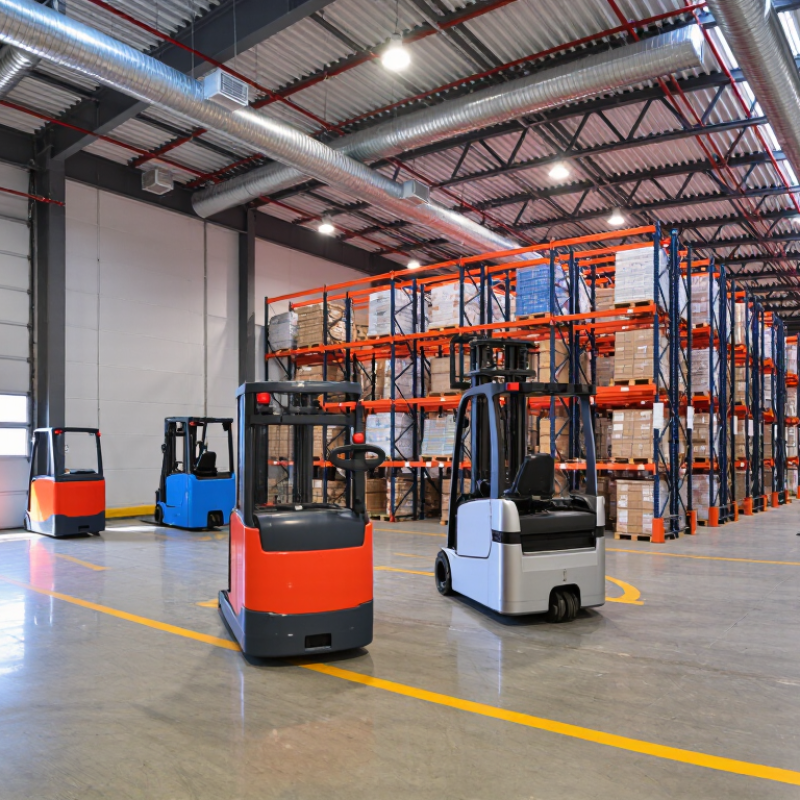
Indoor forklift selection starts with air quality, aisle clearance, floor condition, and pedestrian traffic. OSHA estimates that forklifts cause about 85 workplace deaths and 34,900 serious injuries annually in the United States. That figure deserves attention. A practical indoor shortlist includes electric counterbalance trucks, reach trucks, pallet stackers, order pickers, and narrow-aisle trucks. Each serves a different workspace.
Can I use an IC forklift indoors? Sometimes, but only under controlled conditions. Internal-combustion models produce exhaust gases, including carbon monoxide. OSHA’s Powered Industrial Trucks standard requires adequate ventilation where combustion engines operate. NIOSH also identifies engine exhaust as a carbon monoxide exposure risk in enclosed workplaces. Open doors may not provide enough airflow. A qualified professional should assess ventilation, emissions, traffic separation, and carbon monoxide monitoring. Guesswork is not a safety plan.
Electric forklifts usually suit clean warehouses, cold storage areas, and facilities with strict noise limits. IC forklifts may fit heavy loading work or mixed indoor-outdoor routes. Selection should match load weight, lift height, aisle width, duty cycle, and charging or fueling access. OSHA requires operator training and performance evaluation at least every three years, with additional training after workplace changes or unsafe events. The “best” truck on paper may still fail when racks are crowded or floors are uneven. That is the part many specifications overlook.
| Forklift Type | Typical Power Source | Typical Rated Capacity | Typical Lift Height | Typical Aisle Requirement | Indoor Advantages | Main Limitations | Indoor Suitability |
|---|---|---|---|---|---|---|---|
| Electric Counterbalance Forklift | Battery-electric | 1.5–5.0 tonnes | 3–7 m | 3.4–4.2 m | Zero tailpipe emissions, low noise, stable counterbalanced design, and suitable for loading docks and general warehouse work. | Charging time, battery-room requirements, and reduced performance if the battery is not properly maintained. | Excellent |
| Reach Truck | Battery-electric | 1.0–2.5 tonnes | 6–12 m | 2.6–3.0 m | Efficient high-level pallet storage, compact turning envelope, and excellent visibility for racking operations. | Designed mainly for smooth indoor floors and pallet racking; less suitable for rough outdoor surfaces or long-distance transport. | Excellent |
| Order Picker | Battery-electric | 0.5–1.5 tonnes | 2–10 m platform height | 1.8–2.8 m | Well suited to piece-picking, stock replenishment, and narrow warehouse aisles; quiet operation supports occupied workspaces. | Not intended for heavy-load handling or conventional high-volume pallet transport; operator fall-protection procedures are essential. | Excellent |
| Very Narrow Aisle Turret Truck | Battery-electric | 1.0–1.5 tonnes | 8–16 m | 1.6–2.0 m | Maximizes storage density and can place pallets at substantial heights in specially designed narrow aisles. | Requires highly accurate floor conditions, compatible rack design, trained operators, and dedicated aisle layouts. | Excellent |
| IC Counterbalance Forklift | LPG, diesel, or gasoline engine | 1.5–5.0+ tonnes | 3–6 m | 3.5–4.5 m | Fast refueling, strong continuous-duty performance, and good suitability for heavy loads or mixed indoor–outdoor operations. | Produces exhaust emissions, heat, noise, and potentially harmful carbon monoxide; diesel is generally unsuitable for enclosed occupied areas. | Conditional |
Selection note: Capacity, lift height, aisle width, operating hours, floor condition, ventilation, charging or refueling access, and local workplace-safety requirements should be verified before purchase. Actual specifications vary by configuration, mast, attachment, load center, and manufacturer.
Electric counterbalance trucks suit clean warehouses and regular pallet movement. Reach trucks fit narrow aisles and taller storage. Walkie stackers handle lighter loads, often below two tonnes. Choose based on load weight, lift height, aisle width, and floor condition.
Sometimes, but only with controlled ventilation and documented air-quality checks. Exhaust gases can accumulate quietly near closed loading doors. Fuel type, operating time, traffic, and building airflow all matter. A doorway alone is not enough.
Electric forklifts produce no tailpipe emissions and usually create less noise. They suit clean warehouses, cold storage, and noise-sensitive facilities. Battery charging requires a controlled, ventilated area. Charging space can become a hidden cost.
Carbon monoxide can build without any warning smell. Exhaust leaks, poor airflow, and long operating periods increase exposure risks. Heat and visibility problems may also affect workers. Stop work if alarms, symptoms, or ventilation concerns appear.
Measure the narrowest aisle, not the average aisle. Reach and turret trucks can work in aisles below three metres. They need trained operators and smooth, well-maintained floors. Crowded racks can defeat an efficient design.
Consider fuel or electricity, charging equipment, battery replacement, tires, maintenance, and training. Include downtime and lost production time. Faster refueling may help heavy work. The cheapest purchase can become expensive later.
Operators should inspect brakes, tires, forks, steering, alarms, and visible leaks every shift. Check the floor, racks, lighting, and pedestrian routes. Confirm the load is stable and within limits. Small defects deserve attention.
Separate walking routes from forklift lanes wherever possible. Improve visibility near corners, doors, and storage ends. Use clear traffic rules and controlled crossing points. Train operators and pedestrians regularly. Separation helps, but it is not perfect.
Operators need initial training, practical evaluation, and refresher training when conditions change. Reassessment is also needed after unsafe events or poor performance. Training should cover reversing, load limits, inspections, and emergency stops. Real workplace conditions matter more than classroom confidence.
Choosing the best forklift for indoor work depends on the building layout, floor conditions, load requirements, ventilation, noise limits, and operating costs. Electric forklifts are often ideal for enclosed spaces because they produce no exhaust emissions, operate quietly, and require less routine maintenance. For narrow aisles, reach trucks and pallet stackers can improve maneuverability and support efficient pallet storage, while larger electric models may be suitable for heavier loads and longer shifts.
Can I use an internal combustion forklift indoors? In some facilities, an IC forklift may be used only when adequate ventilation, air monitoring, and site safety procedures are in place. Exhaust emissions, noise, heat, and fuel storage must be carefully managed, especially in small or poorly ventilated areas. When comparing options, consider lifting capacity, fuel or battery type, charging or refueling needs, aisle width, maintenance, and total operating cost. The safest choice is the forklift that matches the workspace while maintaining clean air, stable handling, and reliable productivity.

 Titan Forklift