How to Calculate Monthly Forklift Lease Costs

Time:2026-09-13 Author:Madeline
0%

How much does it cost to lease a forklift monthly? The practical answer usually ranges from about $500 to more than $2,000 per month. The final figure depends on forklift capacity, fuel type, lease length, location, brand, and included services. A compact electric forklift for light warehouse work may sit near the lower end. A heavy-duty diesel model, with outdoor tires and higher lifting capacity, can cost considerably more.

James A. Tompkins, a recognized supply-chain and material-handling expert, has said, “The real cost of equipment is measured by how well it supports the flow of goods.” That idea matters here. A low monthly payment may look attractive beside a loading dock, but it could exclude maintenance, battery charging equipment, delivery fees, insurance, or end-of-lease charges. Those details can quietly change the budget. Completely.

This guide explains the main cost components behind a forklift lease. It also compares operating leases, finance leases, maintenance plans, and possible usage limits. Readers will see how a quoted $850 monthly payment can become $1,050 after service and transport charges. Exact pricing still requires a current dealer quote. Market conditions change, and online estimates can become outdated. That is a weakness worth acknowledging. A careful calculation should examine the forklift’s expected hours, daily load weight, operating environment, and replacement needs. The cheapest lease is not always the most reliable business decision.
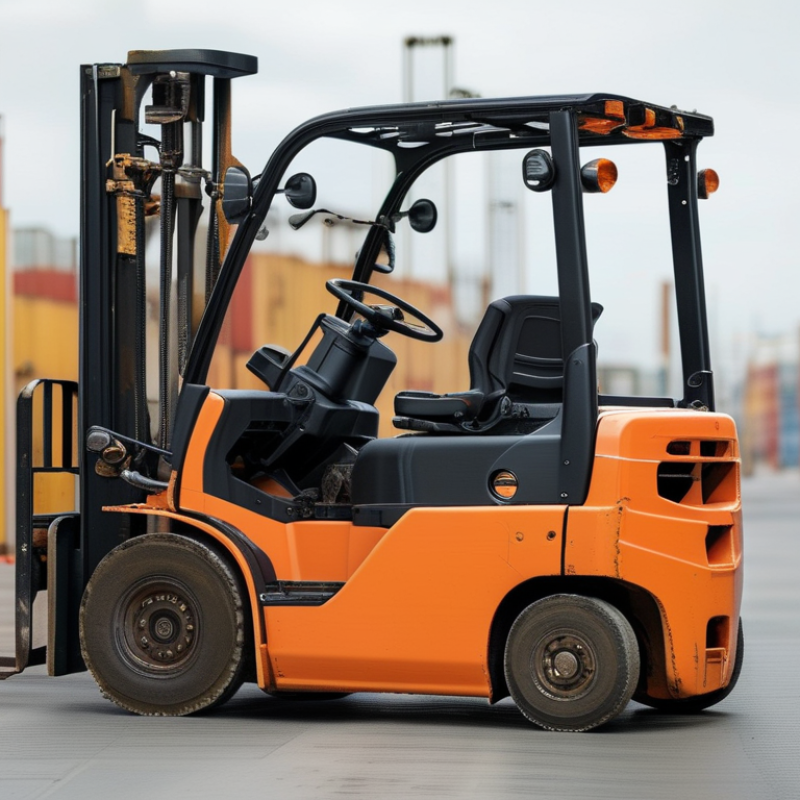
How to Calculate Monthly Forklift Lease Costs

Identify the Main Factors That Determine Forklift Lease Costs

How to Calculate Monthly Forklift Lease Costs

A practical monthly estimate starts with the base lease payment, then adds operating obligations. Use this formula: monthly cost = lease payment + maintenance + insurance + delivery fees + taxes − approved credits. The lease payment depends on the forklift’s purchase price, contract term, interest rate, expected residual value, and initial deposit. A higher-capacity truck usually costs more. Electric models may also require charging equipment.

Usage is often the overlooked variable. Record operating hours, average load weight, aisle conditions, attachments, and annual shifts. A truck moving pallets for 300 hours monthly faces different wear than one working 80 hours. Maintenance pricing should reflect tires, batteries, inspections, and emergency repairs. The 2024 MHI Annual Industry Report found that 83% of respondents planned to increase technology and innovation investment, highlighting the growing need to evaluate equipment utilization, not just acquisition price (MHI, 2024).

Contract structure matters. A full-service lease can stabilize monthly expenses, while a finance-style lease may leave maintenance and end-of-term risk with the user. The Equipment Leasing & Finance Association’s 2024 U.S. Economic Outlook emphasizes that financing conditions and equipment investment trends influence business acquisition decisions (ELFA, 2024). Ask whether mileage, operating hours, damage, early termination, and residual-value charges are included. The estimate will rarely be perfect. Review actual costs quarterly, because low monthly payments can hide expensive exclusions.

Gather the Lease Terms and Forklift Specifications

To calculate monthly forklift lease costs, gather the complete lease terms before requesting a quote. Record the lease length, monthly payment, deposit, delivery fee, taxes, maintenance coverage, excess-hour charge, and end-of-term conditions. A simple estimate is monthly payment plus recurring fees, divided across the contract period. Do not treat the advertised payment as the final cost.

Forklift specifications matter just as much. Write down rated capacity, load center, lift height, mast type, power source, tire design, operating hours, and required attachments. A 5,000-pound capacity truck may cost more than a 3,000-pound model, especially with a three-stage mast or side-shift attachment. The World Industrial Truck Statistics 2023 report recorded more than 2.3 million industrial truck shipments worldwide. That scale suggests broad equipment choice, but specification differences still drive pricing. OSHA 1910.178 also requires capacity information and safe operating practices, so the data plate should match the planned workload.

Tips: Photograph the data plate and hour meter. Compare maintenance-inclusive and repair-only leases separately. Ask whether batteries, chargers, tires, and operator training are included. A 60-month term may lower the monthly figure, but it can increase total exposure. I have seen estimates fail because “monthly cost” excluded insurance and service calls. Recheck every assumption.

Calculate the Base Monthly Lease Payment

How to Calculate Monthly Forklift Lease Costs

Calculate the Base Monthly Lease Payment

The base monthly lease payment usually starts with the forklift’s price, expected residual value, and lease term. A practical formula is:

(Equipment Cost − Residual Value) ÷ Lease Months + Monthly Finance Charge.

For example, a forklift costing $30,000 with a $9,000 residual value over 36 months creates $583.33 in monthly depreciation. If the quoted finance charge is $150 monthly, the base payment becomes $733.33. Check the figures carefully. A small error in the residual value can change the payment significantly.

This base amount normally excludes taxes, delivery, registration, maintenance, insurance, and possible end-of-lease fees. Ask for an itemized quotation, not only a rounded monthly figure. In equipment reviews, I have found that unclear residual assumptions cause the most confusion. Some estimates also use a different interest method. That is easy to miss. Compare the stated annual rate, payment timing, and total lease obligation before signing anything. This estimate is useful, but it is not perfect without the complete contract.

Tips: Confirm whether the residual value is guaranteed or projected. Verify if the first payment is due immediately. Request the total number of payments in writing. Also, test the calculation with a spreadsheet. A calculator may hide a wrong input. If operating hours are high, separate maintenance costs from the base payment, because heavy use can change the real monthly budget.

Add Maintenance, Insurance, and Other Recurring Fees

How to Calculate Monthly Forklift Lease Costs

A forklift lease payment is only the visible line on your monthly statement. Add scheduled maintenance, insurance, energy, inspections, and end-of-lease charges. For example, a $1,050 lease payment may become $1,400 monthly: $175 for maintenance, $90 for insurance, $60 for charging, and $25 for inspections. These figures are planning estimates, not universal market rates. Request written quotes with labor, parts, travel, deductibles, and taxes listed separately.

Maintenance deserves careful attention. OSHA’s powered industrial truck standard, 29 CFR 1910.178, requires inspections at least daily or each shift. A neglected tire, leaking hydraulic hose, or weak battery can create downtime before it creates a repair invoice. Include preventive service, emergency response, replacement tires, and battery watering in the lease review. MHI’s 2024 Annual Industry Report identifies operating costs and labor availability as continuing material-handling pressures. That makes predictable service valuable, even when the monthly price looks higher.

Tips: Track every hour. Divide annual service estimates by twelve. Compare insurance limits and deductibles. Keep a repair log beside the charging station. My first cost worksheet missed productivity losses during repairs. That omission was uncomfortable, but useful. Also test the calculation with heavy-use and low-use months; averaging everything can hide seasonal expenses. Maryland or Nevada? Local taxes and insurance can change the result significantly. Consult a qualified fleet accountant before signing.

Compare the Total Monthly Cost Across Lease Options

How to Calculate Monthly Forklift Lease Costs

Comparing lease options requires more than reading the advertised monthly payment. I calculate the effective monthly cost by adding the lease payment, scheduled maintenance, insurance, delivery fees, taxes, and expected energy costs. Any upfront deposit or documentation fee should be divided across the lease term. For example, a $2,400 upfront charge on a 48-month lease adds $50 per month.

Consider two options for a warehouse forklift. Option A costs $1,050 monthly, with $180 for maintenance and $120 for estimated charging. Its effective monthly cost is $1,350. Option B costs $900 monthly, but maintenance reaches $310 and charging averages $150. Its total is $1,360. The cheaper payment is not always the cheaper arrangement.

Contract details can change the comparison. Check usage-hour limits, excess-hour charges, repair exclusions, delivery conditions, and end-of-term responsibilities. A lease with included maintenance may offer steadier budgeting, especially where equipment operates several shifts daily. A lower-cost plan may work better for lighter use.

I also compare downtime risk. A missed delivery can disrupt loading schedules and create labor costs that spreadsheets often ignore. That estimate is difficult. Still, recording repair history and average operating hours improves accuracy. Residual-value assumptions deserve careful review, too. They can make one option appear attractive while shifting costs toward the contract’s final months. Perform the calculation using actual site data, then revisit it after the first quarter.

FAQS

What is the basic formula for calculating monthly forklift lease costs?

Monthly cost equals lease payment, maintenance, insurance, delivery fees, and taxes, minus approved credits. The estimate is only a starting point.

Which factors affect the base lease payment?

Purchase price, contract length, interest rate, residual value, and deposit all influence the payment. Higher-capacity trucks usually cost more.

How much can extra monthly charges add?

A $1,050 lease payment might reach $1,400 after maintenance, insurance, charging, and inspections. These are planning figures, not guaranteed rates.

How does forklift usage change leasing costs?

Record operating hours, load weights, aisle conditions, attachments, and annual shifts. A truck working 300 hours monthly may wear faster than one working 80 hours.

Which maintenance expenses should a lease estimate include?

Include scheduled service, tires, battery care, inspections, emergency repairs, labor, parts, and travel charges. Keep a repair log.

Are full-service leases easier to budget?

Often, yes. Full-service agreements can stabilize monthly expenses and reduce unexpected repair bills. Read the exclusions carefully.

What hidden contract charges should users check?

Ask about operating-hour limits, damage fees, early termination, delivery, taxes, and residual-value charges. Low payments can hide expensive exclusions.

How should electric forklift costs be estimated?

Add charging equipment, electricity, battery servicing, and possible replacement costs. Energy expenses may look small at first.

How can businesses improve the accuracy of their cost estimates?

Request written quotes with labor, parts, deductibles, taxes, and travel listed separately. Review actual costs quarterly.

What common mistake can distort a forklift budget?

A worksheet may ignore downtime and lost productivity during repairs. That mistake matters. Test heavy-use and low-use months separately.

Conclusion

Calculating monthly forklift lease costs begins with identifying the factors that influence the price, including the forklift’s capacity, power type, age, expected usage, lease duration, upfront payment, and end-of-lease terms. To answer “How much does it cost to lease a forklift monthly?”, gather the complete lease terms and equipment specifications first. Then calculate the base monthly payment by considering the total equipment value, agreed residual value, financing rate, and contract length.

The final monthly cost should also include recurring expenses such as scheduled maintenance, service coverage, insurance, delivery, administrative charges, and possible usage fees. Some agreements may offer a lower base payment but charge more for maintenance or excess operating hours, while others provide a higher payment with broader service coverage. Comparing the total monthly cost across several lease options helps reveal the most practical choice for your budget, workload, and long-term equipment needs.

Madeline

Madeline

Madeline is a dedicated marketing professional with a wealth of expertise in our company's core offerings. With a keen understanding of the industry, she brings a unique perspective to her role, consistently delivering high-quality content that highlights the superior aspects of our products. As......