China’s forklift-license rules can seem like a small administrative detail—until an operator faces an unfamiliar truck, a crowded warehouse aisle, or a failed inspection. This introduction to “China Top Forklift License Requirements Explained” examines what operators and employers should verify before work begins. The central question is: “What are the legal requirements for a forklift license?” In China, regulated forklift operation is generally linked to a special equipment operator certificate, commonly identified as category N1. Exact eligibility, training, examination, and application procedures should be checked against current national rules and the local market-regulation authority. Details matter.
Safety scientist Sidney Dekker offers a useful reminder: “Safety is not the absence of accidents, but the presence of capacity.” That idea applies on the warehouse floor. A certificate may establish that an operator met required assessment standards, but it does not replace site-specific instruction, careful supervision, or familiarity with the machine. A forklift that feels predictable in an open training area can behave differently near stacked pallets and blind corners.
This guide will separate certificate requirements from practical workplace responsibilities, explain which details employers should confirm, and flag common misunderstandings. It will also distinguish general guidance from advice about an individual application. That distinction is easy to miss. Rules and procedures can change, and local offices may give instructions that need careful checking. One checklist cannot answer every case; readers should verify current requirements before relying on it.
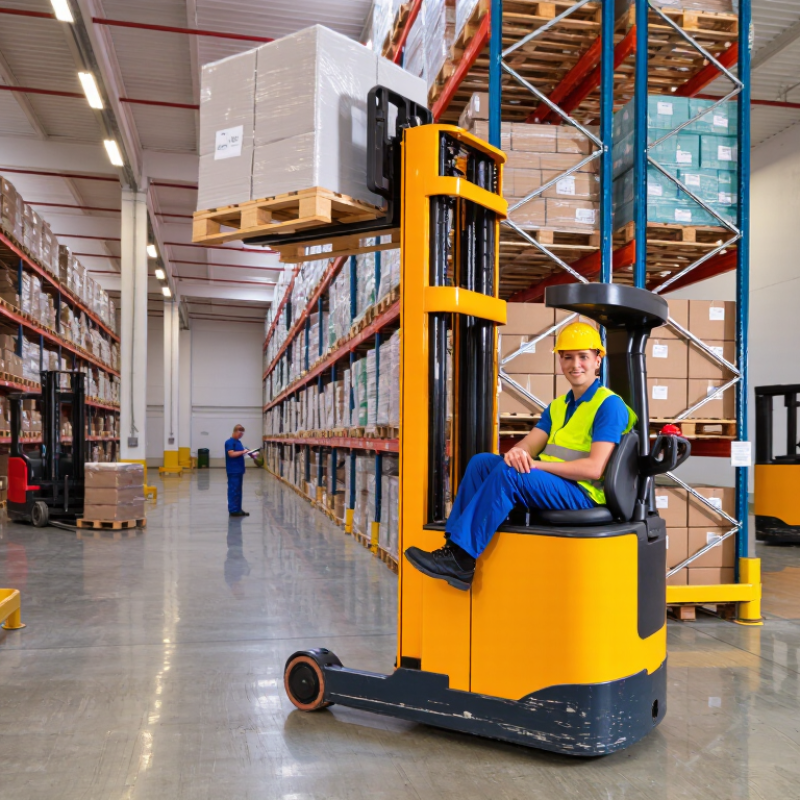
China’s N1 certificate is the Chinese special-equipment operator qualification for forklift operators. It is a classification, not a forklift model or a general driving licence. The qualification appears in China’s Special Equipment Operator Qualification Catalogue, administered through the market-regulation system. The China Industrial Truck Association reported about 1.17 million industrial vehicles sold in 2023. That scale makes clear why operators need both formal qualification and practical skill. The code sounds simple. The work is not.
N1 certification concerns operating forklifts covered by the relevant special-equipment rules. It does not automatically qualify someone for every vehicle or workplace task. Applicants should confirm current exam requirements and certificate status with the local market-regulation authority. Employers should also check that the certificate matches the equipment and duties involved. A certificate alone cannot replace site-specific instruction.
Tips: Check the N1 classification against the forklift type before enrolling. Keep your certificate details available for verification. Practise slow turns, load positioning, and clear sightlines; a small blind spot can matter. Local procedures may differ, so confirm them rather than relying on an old checklist.
For China’s N1 forklift operator qualification, the minimum age is 18 under the special-equipment operator assessment rules, TSG Z6001-2019. Applicants must also be healthy enough for the specific work. This is a practical requirement, not a promise that every 18-year-old is ready. Forklift work involves reversing in tight aisles, checking loads, and reacting quickly around pedestrians.
Health fitness should be considered in functional terms. Clear vision, adequate hearing, steady movement, and the ability to stay alert can all affect safe control. The rules do not mean every medical condition automatically disqualifies an applicant; the relevant question is whether it affects the required duties. OSHA’s forklift safety guidance cites U.S. estimates of about 85 deaths and 34,900 serious injuries each year. Those figures are not China-specific, but they show why age alone is not enough. A certificate check cannot capture every real-world limitation.
Tips: Before applying, confirm the current medical-document requirements with the local examination body. Be candid about health concerns, and check that you can see warning lights, hear alarms, and turn comfortably to inspect behind you. Small details matter.
The chart shows the commonly stated minimum age requirement. Applicants must also be in good health and meet the physical requirements for the relevant operation.
Eligibility and health assessments are subject to the current applicable rules and examination arrangements.
Applying for a forklift operator certificate in China usually starts with checking the current rules in your city. Forklift operation is generally handled under the special-equipment operator system, but local procedures can change. Ask the local market regulation office or its designated examination center which category and application route apply. Do this before paying for training. Typical documents include a valid identity document, a recent photo, education records, and an application form. Some offices may request a health statement or additional proof. Requirements are not identical everywhere. Keep copies. A missing stamp can mean another trip.
After eligibility is checked, enroll in a course accepted by the local authority, if training is required. Practice should cover safety checks, controls, load handling, parking, and workplace hazards. Training yards often use marked lanes, pallet loads, and pre-operation inspection sheets. Ask how written and practical exams are scheduled, and what identification you must bring. Submit the application through the office, service platform, or examination center specified locally. Save the receipt and confirm your test date. The paperwork can feel repetitive, and online guidance may be outdated. Call the office with your document list before traveling.
In China, forklift qualification commonly involves two parts: a theory test and a practical operation test. The exact booking process and scoring rules can vary by local testing center. Confirm current requirements with the local market-regulation authority or an authorized training center. Theory questions may cover operating principles, safety procedures, load limits, warning signs, and emergency response. A useful study habit is matching each rule to a real control or dashboard symbol. Small details matter.
The practical test checks controlled operation, not just speed. Candidates may need to inspect forks and tires, start safely, carry a load, turn around markers, and park with the forks lowered. Practise smooth starts and stops on a marked course; watch the load while keeping a clear view. OSHA’s Powered Industrial Trucks eTool cites estimates of about 85 forklift-related deaths and 34,900 serious injuries each year in the United States. These figures are not China-specific, but they underline why safe habits belong in the exam. Honestly, a mock course can feel artificial. That gap deserves attention: practise noticing floor conditions and blind spots, not only memorizing the test route.
| Requirement or Exam Dimension | What Applicants Should Know |
|---|---|
| Relevant credential | Forklift driving is generally covered by the Special Equipment Operator Certificate, category N1 (forklift driver), in China. |
| Issuing and examination arrangements | Applications and examinations are handled under the local market regulation authority’s arrangements. Procedures, schedules, and required documents can vary by location. |
| Basic eligibility | Applicants generally need to be at least 18, in suitable physical condition, and have the education and skills required for the work. Confirm the current local requirements before applying. |
| Exam structure | The assessment has two parts: a theory examination and a practical operation examination. Applicants must meet the requirements for both parts. |
| Part 1: Theory | Typically tests relevant safety rules, forklift fundamentals, operating procedures, hazard awareness, load handling, and emergency response. The format and question count are set by the examination arrangement. |
| Part 2: Practical operation | Assesses safe pre-operation checks and forklift handling in practical tasks. Tasks may include starting and stopping, steering, travelling, lifting and placing a load, parking, and following safety signals. |
| Practical safety focus | Examiners may observe the operator’s control of the truck, awareness of pedestrians and surroundings, load stability, compliance with instructions, and safe completion of tasks. |
| Passing and retesting | Passing criteria and retest arrangements should be checked in the current local examination notice. Do not assume that passing one part automatically qualifies an applicant for the certificate. |
| Documents and preparation | Applicants may be asked for identification, an application, and other locally required materials. Prepare with recognized training and review the official examination outline for the relevant location. |
| Certificate maintenance | Check the certificate’s validity period and renewal or review requirements printed on the certificate and stated by the issuing authority. Apply in accordance with the applicable deadline. |
Note: Requirements, examination content, scoring, and application procedures may be updated or administered differently by locality. Confirm the latest information with the local market regulation authority or its designated examination organization.
For forklift applicants in China, the passing mark is commonly 70 points for each exam part, not 70 points overall. The assessment may include written knowledge and practical operation, but the local exam notice should confirm the format. A strong theory score cannot make up for a practical result below the required mark. Check the rules before booking.
Prepare for the actual tasks, not just the score. Review safety checks, operating controls, load handling, and shutdown steps. During practice, slow down near corners and keep the forks low while travelling. Small habits matter. A missed check can cost points, even when the machine feels familiar. I would not treat 70 as a comfortable target; nerves can make simple steps harder to remember.
Forklift operator certificates in China are generally valid for four years, though the issuing authority and certificate category should be checked. Note the expiry date as soon as the certificate is issued, then confirm renewal timing and required documents with the relevant local authority. Requirements can change, and renewal may involve more than submitting a form. Keep copies of training and assessment records. A calendar reminder helps, but it is not a substitute for checking the current instructions.
It is a special-equipment operator qualification for certain forklift operations in China. It is not a general driving licence.
No. Check that the classification matches the equipment and duties. Site-specific instruction is still needed.
Ask the local market-regulation office or its designated examination center. Rules can shift.
Common items include an identity document, recent photo, education records, and an application form. Some offices may request extra proof.
Not necessarily. Requirements differ by location, so confirm the document list before traveling.
Practice may include safety checks, controls, load handling, parking, and workplace hazards. Marked lanes and pallet loads can help.
Call the local office before traveling. Keep document copies, and check whether any stamps or extra forms are needed.
Confirm the test schedule and required identification locally. Keep certificate details available for verification; online guidance may be outdated.
China’s N1 Forklift Operator Certificate is the relevant license classification for eligible forklift operators. What are the legal requirements for a forklift license? Applicants must be at least 18 years old and meet the required health conditions for safe operation. The application process generally involves preparing the necessary documents, completing training, and applying through a local market-regulation office. Applicants should check with their local office for current procedures and document requirements.
The examination has two parts: a theory test and a practical operation test. Candidates must score at least 70 points in each part to pass. After passing, operators receive a certificate that is valid for a specified period and must be renewed according to applicable requirements. Understanding the classification, eligibility rules, application steps, exam structure, and renewal obligations helps applicants prepare for certification and maintain their qualification.

Titan Forklift