What is the difference between 3-wheel and 4-wheel forklifts? The answer becomes clear on a warehouse floor: a three-wheel truck can pivot through tighter turns, while a four-wheel model typically offers greater stability across uneven ground. These are useful tendencies, not guarantees. Tire type, load center, lift height, and the specific model all matter.
OSHA’s forklift safety guidance estimates that forklifts are involved in about 85 fatal accidents and 34,900 serious injuries each year in the United States. Those figures cover forklift incidents broadly; they do not show that one wheel layout is inherently safer. They do underscore why route conditions, operator training, and the truck’s rated capacity deserve close attention. In a narrow aisle, the extra maneuverability of a three-wheel forklift may help. On a rough yard surface or with demanding loads, a four-wheel design may be the better fit.
A simple selection rule: “Match the truck to the tightest turn and roughest surface on its regular route.” That is practical guidance, not a verified quotation from a named industry expert. Without a source for an attributable expert statement, assigning those words to a person would be misleading. The comparison ahead looks at turning space, stability, load handling, and operating environment, so buyers can weigh the trade-offs against real site conditions.
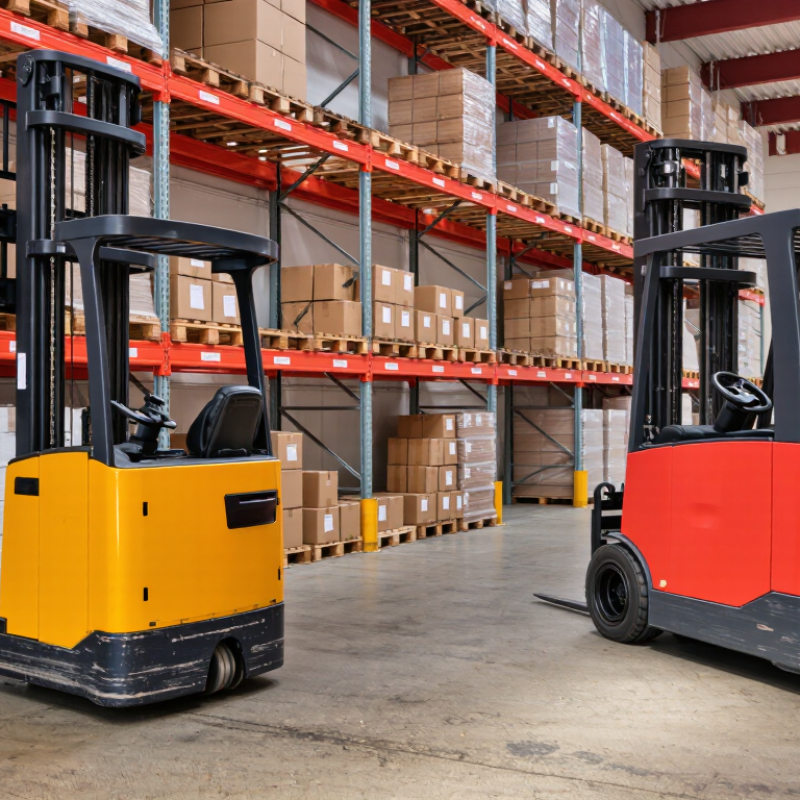
How Three-Wheel and Four-Wheel Forklifts Are Configured
Three- and four-wheel forklifts are defined by their wheel layout, but the count alone does not explain handling. The distinction is practical. In a common three-wheel electric design, two wheels support the front axle beneath the mast, while one rear wheel steers. This arrangement can allow a tight turn in a compact aisle. The battery and counterweight balance the load behind the mast, though exact layouts vary.
A typical four-wheel layout has two front load wheels and two rear steering wheels, often connected by a steering axle. The wider rear support can feel steadier with a load or across uneven floor joints. It may also require more turning room. Not always. Steering geometry, tire type, wheelbase, mast height, and load center all affect handling. On smooth warehouse concrete, a tight turning radius may matter most; on rougher surfaces, stability and wheel contact deserve closer attention.
When comparing configurations, check rated capacity at the intended load center, turning radius, and aisle width. Then observe the truck with a representative load. Keep floor conditions in view. A small threshold can change how the wheels share contact. It is easy to focus on the rear-wheel count and overlook the front axle. Match the specifications to the task rather than assuming similar layouts will perform alike.
What Is the Difference Between 3- and 4-Wheel Forklifts?
A comparison of typical wheel and steering-wheel configurations
How to read this chart: Three-wheel forklifts typically have one rear steering wheel, while four-wheel forklifts typically have two rear steering wheels. The extra wheel can provide added stability; a three-wheel layout can offer a tighter turning circle. Specific designs vary by model.
How Wheel Layout Affects Turning and Maneuverability
A three-wheel forklift typically has two wheels at the front and one steerable wheel at the rear. That single rear wheel can pivot sharply, helping the truck turn within a compact radius. In a narrow aisle, it may line up with a pallet using fewer adjustments. Handy, but not effortless: the rear end swings as the truck turns, so operators need room to watch nearby racks and pedestrians.
A four-wheel layout usually has two front wheels and a rear steering axle. It often needs a wider turning space, though the exact radius depends on the truck’s design. The extra wheel can make the truck feel steadier, especially when carrying heavier loads or crossing uneven concrete. “Four wheels” does not guarantee better control everywhere. Load height, surface condition, and steering setup all matter.
The difference shows up in real movements. Picture a tight warehouse corner: a three-wheel truck may pivot through it with less back-and-forth, while a four-wheel truck may need a broader approach. On a rough loading area, the steadier feel of four wheels may be more useful than a tight turn. Specs help, but they can mislead if aisle width is measured loosely. Test the turning path with the usual load, at walking speed. One awkward corner can change the choice.
How Stability, Load Capacity, and Terrain Performance Differ
A three-wheel forklift usually has two front wheels and one rear steering wheel. This layout gives it a tight turning radius, useful in narrow aisles and crowded indoor spaces. Small radius matters. But quick steering does not equal greater stability. Turning sharply with a raised load can shift the combined center of gravity toward the edge of the truck’s stability area.
Four-wheel forklifts generally offer a wider stance and can feel steadier when carrying loads across open floors. Still, wheel count alone cannot predict safe capacity. OSHA’s powered industrial truck standard requires operators to keep loads within the truck’s rated capacity; the capacity plate also specifies conditions such as load center. A long pallet can reduce usable capacity, even when the load feels manageable. Check the truck’s plate and the actual load dimensions.
Terrain changes the comparison. Three-wheel models often suit smooth concrete and tight indoor routes, while many four-wheel models are configured for outdoor surfaces and uneven ground. Tires, ground clearance, suspension, and chassis design matter as much as the wheel arrangement. NIOSH’s 2001 forklift safety alert estimated about 100 worker deaths and 20,000 serious injuries annually in the United States. That historical estimate covers forklift incidents generally, not a comparison of wheel layouts. A tidy rule—three wheels for indoors, four for outdoors—can mislead. Inspect the route, especially where joints, ramps, or loose gravel interrupt the floor.
Where Each Forklift Type Is Commonly Used
Three-wheel forklifts are commonly used indoors, where narrow aisles and frequent turns shape the work. Their compact rear-steering layout helps in small warehouses, retail stockrooms, and production areas with dense shelving. An operator can turn around a pallet without needing a wide swing. Tight turns matter. But a three-wheel design is not automatically best for every confined site; floor condition, load size, and aisle width still decide the fit.
Four-wheel forklifts are often chosen for heavier loads, longer shifts, and routes that move between indoor floors and outdoor yards. The wider stance can feel steadier over rougher surfaces, though it may need more turning space. Measure the actual route. Doorways, dock plates, floor joints, and stacked pallets can change the choice. OSHA’s forklift safety guidance estimates about 85 fatal incidents and 34,900 serious injuries involving forklifts each year in the United States. Those figures cover forklifts broadly, not one wheel configuration, but they underline why visibility, training, and traffic planning matter. Sometimes the “more stable” option is simply too large for the aisle.
What to Consider When Choosing Between the Two Types
Choosing between three- and four-wheel forklifts starts with the route, not the brochure. A three-wheel layout often turns more tightly, making it useful in narrow aisles and crowded indoor spaces. A four-wheel layout generally offers a steadier feel on rougher surfaces or during heavier handling. But wheel count alone does not determine capacity or stability; check the truck’s rated capacity at the actual lift height and load center.
Measure the tightest aisle, doorways, turning points, and floor transitions. Then test with the pallet size and load you use every day. Space is tight. OSHA estimates that powered industrial truck incidents cause about 85 deaths and 34,900 serious injuries each year in the United States. That figure does not compare wheel layouts, but it underlines why visibility, operator training, and safe handling matter alongside maneuverability.
A smooth warehouse floor may favor a compact three-wheeler, while outdoor routes with uneven paving may favor a four-wheeler. Check tire type, braking, overhead clearance, and how the truck behaves with a raised load. A paper comparison can mislead; a supervised test on your own route is more useful. I would still leave room for doubt: changing loads or floor conditions can change which truck feels right.
Conclusion
What is the difference between 3-wheel and 4-wheel forklifts? The main differences lie in their wheel layout, maneuverability, stability, and suitability for different working conditions. Three-wheel forklifts typically use a compact design with a single rear steering wheel, allowing a tighter turning radius and easier movement through narrow aisles. Four-wheel forklifts have two front and two rear wheels, providing a broader base that generally offers greater stability and support for heavier loads.
These strengths shape where each type is most useful. Three-wheel models are often suited to smooth indoor floors and confined warehouse spaces, while four-wheel models can be a better fit for heavier lifting, outdoor work, or less even surfaces, depending on the specific equipment. When choosing between them, consider aisle width, load weight, floor and terrain conditions, turning space, and how frequently the forklift will operate indoors or outdoors. The right choice is the one that best matches the site’s layout and daily material-handling needs.

 Titan Forklift