Maintaining forklifts in cold storage environments presents unique challenges. These machines operate under extreme temperatures, which can significantly affect their performance and longevity. Understanding how to maintain a forklift in cold storage environments is essential for ensuring safety and efficiency.
Cold weather can lead to issues like battery failure, frozen hydraulic fluids, and reduced tire traction. Regular inspections are crucial. Operators should check fluid levels, battery health, and tire conditions frequently. Using appropriate lubricants designed for low temperatures can enhance functionality. Preventive maintenance can prevent costly breakdowns and enhance productivity.
Training staff to recognize the signs of wear is equally important. Forklifts should be fitted with proper attachments for cold storage tasks. Regularly monitor the condition of these components. Maintaining a routine can prove essential for operational consistency. While it's impossible to eliminate all challenges, being proactive can mitigate risks effectively.
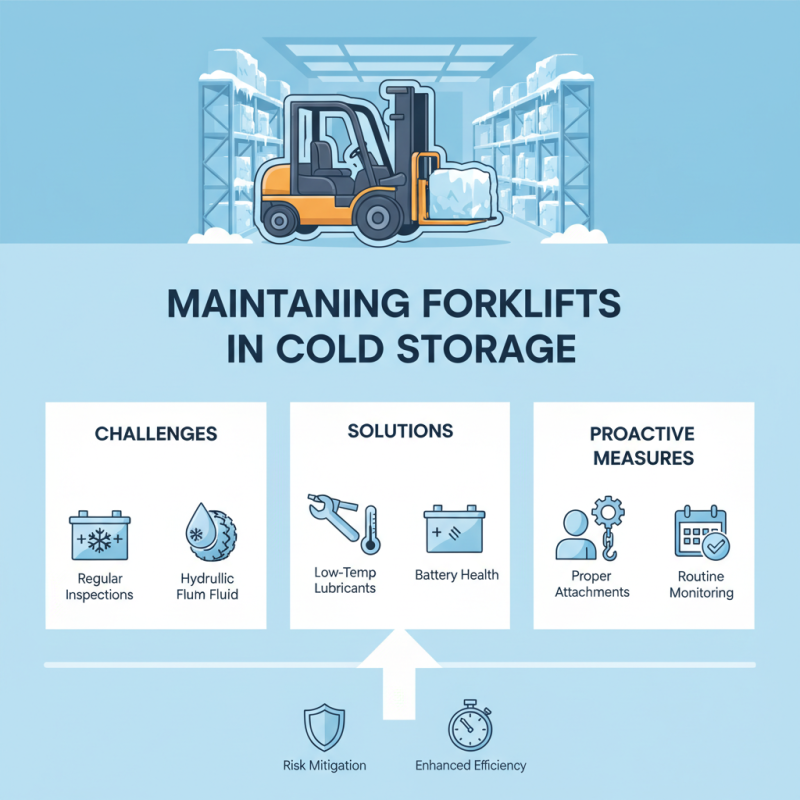
Maintaining forklifts in cold storage environments requires specific attention. Cold conditions can affect battery performance. A study from the Material Handling Industry of America shows that battery efficacy decreases by 20% in temperatures below freezing. Regularly checking battery electrolyte levels is crucial. Additionally, keeping batteries warm during off-hours can help improve longevity.
Tires are another essential aspect. Cold storage often involves damp floors, leading to potential slips. A report from the Occupational Safety and Health Administration indicates that proper tire selection can enhance safety and efficiency in cold environments. Forklift operators should inspect tires for wear and pressure frequently. Ensuring the right tread pattern can provide better traction in icy conditions.
Routine maintenance schedules should be strictly followed. Lubricants used must be suitable for low temperatures. Operators often overlook proper greasing, which can lead to increased wear. Checking forks and chains is vital; any rust or damage should be addressed immediately. Remember, the cold can mask issues that become apparent during warmer months, making it imperative to stay vigilant year-round.
| Maintenance Task | Frequency | Best Practice | Notes |
|---|---|---|---|
| Battery Maintenance | Weekly | Check electrolyte levels and clean terminals | Keep batteries warm, as cold can reduce performance |
| Hydraulic System Check | Monthly | Inspect for leaks and ensure fluid levels are adequate | Cold temperatures can thicken hydraulic fluid |
| Tire Inspection | Bi-Weekly | Check for wear and proper inflation | Use cold-weather tires for better traction |
| Filter Replacement | Quarterly | Replace air and fuel filters regularly | Cold air can carry more moisture, affecting filters |
| Safety Check | Daily | Inspect all safety features and alarms | Ensure operators are trained for cold environments |
: Cold conditions can decrease battery efficacy by 20%. Regular checks on electrolyte levels are essential.
Keeping batteries warm during off-hours helps enhance their lifespan and performance.
Proper tire selection increases safety and efficiency on damp, icy floors. Inspecting tires frequently is crucial.
Operators should check battery condition, fluid levels, and the state of tires. They often overlook these critical checks.
Cold temperatures can thicken hydraulic fluid, leading to slower operation. This can happen if operators rush into use.
Warming up allows forklifts to acclimate, preventing sudden performance drops. Many operators tend to skip this step.
Proper greasing of components is frequently overlooked. This neglect can lead to increased wear and tear.
Ignoring minor problems can result in larger complications later. Operators should be proactive in identifying issues.
Continuous learning about cold effects on machinery is vital. Stay informed to handle potential challenges better.
Regular maintenance schedules and inspections of forks and chains should be maintained, even in warmer months.
Proper maintenance of forklifts in cold storage environments is crucial for ensuring their optimal performance and longevity. To address the question of "How to maintain a forklift in cold storage environments?", it is essential to implement best practices that cater specifically to the unique challenges posed by low temperatures. Regular maintenance checks should include inspecting batteries, essential fluids, and tire conditions, since cold can significantly affect their functionality.
Furthermore, utilizing specialized lubricants designed for cold conditions can enhance the performance of forklift components, minimizing wear and tear. Regular maintenance frequency should be increased in these environments to mitigate any potential operational failures. By understanding the effects of cold temperatures and adhering to these maintenance guidelines, operators can ensure their forklifts remain reliable and efficient in freezer settings.

 Titan Forklift