In the field of logistics and material handling, knowing how to install a forklift attachment safely is crucial. Industry expert John Smith, with over 15 years of experience in forklift operations, emphasizes, "Safety and efficiency must go hand in hand during attachment installation." This highlights the importance of proper techniques.
Forklift attachments can enhance operational efficiency. However, incorrect installation can lead to accidents and injuries. Understanding the protocols is essential. It can be daunting to ensure everything is done right. Nonetheless, careful planning and execution can mitigate risks.
Many professionals overlook the specific instructions that come with attachments. This can cause improper usage and lead to equipment damage. Reflecting on past experiences, one can learn the importance of double-checking every step. With a focus on safety, you can boost productivity while protecting your team.
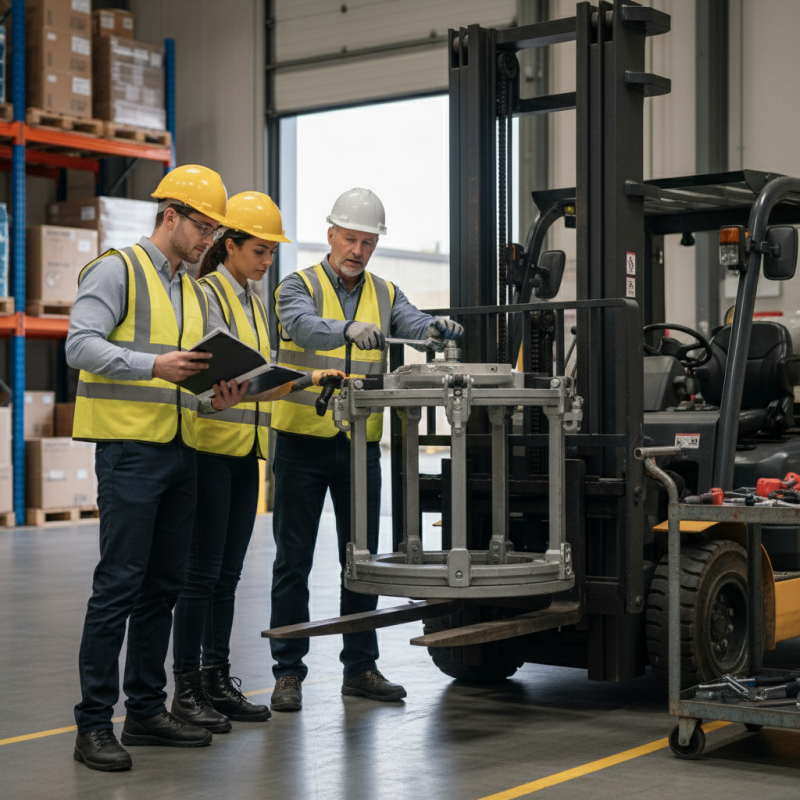
Forklift attachments come in various types, each designed to enhance the versatility of forklift operations. Common attachments include pallet forks, drum handlers, and lifting platforms. Pallet forks are standard for material handling. They allow for quick and easy transport of pallets stacked with goods. Drum handlers are crucial for transporting barrels safely. They minimize the risk of spills and injuries.
Understanding the specific application of each attachment is vital. Misusing an attachment can lead to accidents or equipment damage. For instance, a lifting platform can elevate workers for maintenance tasks. However, if not used correctly, it can tip over, posing severe risks. Operators should be trained and familiar with the weight limits and operational procedures of each attachment.
The choice of attachment depends largely on the task at hand. Not every type suits every job. An inappropriate attachment can hinder productivity instead of helping. Some users may underestimate the importance of proper installation and maintenance. Regular inspections ensure attachments function safely and efficiently. Engaging with a knowledgeable team can lead to better outcomes in attachment use.
Preparing your forklift for attachment installation is crucial for safety and efficiency. Begin by conducting a thorough inspection of the forklift. Check the hydraulic systems, including hoses and connections. Look for any signs of wear or leaks. This step is vital because even minor issues can lead to major accidents or equipment failure.
Next, ensure that the operator understands the installation process. This includes reading the attachment's manual and familiarizing themselves with weight limits. Misjudging these limits can create hazardous situations. Moreover, the area should be clear of obstacles and personnel during installation. Communication is key; use hand signals or radios to maintain clarity.
Lastly, verify that all necessary tools are on hand. Tools should be in good condition to avoid creating hazards. Document any previous issues found during inspections for future reference. This can help improve efficiency and safety during future installations. Preparing correctly may seem tedious, but it prevents regrettable accidents and enhances overall workflow.
| Dimension | Description | Precautions |
|---|---|---|
| Weight Capacity | Maximum load the forklift can handle with the attachment. | Ensure not to exceed the specified weight limit to avoid accidents. |
| Attachment Type | Type of attachment (e.g., fork extensions, clamps). | Verify compatibility with the forklift model before installation. |
| Safety Equipment | Safety gear required during installation (e.g., gloves, helmets). | Always wear appropriate safety gear to reduce risk of injury. |
| Installation Checklist | Step-by-step guide for installing the attachment. | Follow the checklist meticulously for a safe installation. |
| Post-Installation Inspection | Inspection items to ensure the attachment is secure. | Conduct a thorough inspection before usage to prevent malfunctions. |
When installing a forklift attachment, safety should always come first. Using proper safety gear is essential to protect yourself and your team. A hard hat is crucial; it shields your head from potential falling objects. Steel-toed boots are also necessary to protect your feet. These boots prevent injury from heavy equipment or materials. Wearing high-visibility vests can enhance your visibility in busy areas.
Gloves are equally important during installation. They provide grip and protect your hands from sharp edges. Eye protection should not be overlooked, as small particles can become airborne during installation. Ensure you have the right tools ready to avoid unnecessary delays. It’s wise to inspect all equipment before starting work. This practice detects any potential issues early on.
Remember, communication is key among team members. Establish clear signals or use two-way radios. This reduces confusion, especially in noisy environments. Reflect on previous installations to improve your methods. Each attempt can reveal areas for improvement. Always prioritize safety and efficiency; every step counts in ensuring a successful installation.
Attaching a forklift accessory requires careful attention to detail.
Begin by reviewing the operator's manual for guidelines specific to your forklift model.
Ensure that your safety gear is on—this includes gloves and steel-toed boots.
It sets a solid foundation for a safe installation.
Next, prepare the area by clearing obstacles around your forklift. Make sure the surface is level.
Position the forklift so that the forks are at the right height. This makes attachment easier and reduces risk.
Engage the forklift's brakes to prevent any movement during the process.
In this phase, mistakes can happen.
Perhaps you overlook checking if the forks are clean and free from debris.
Such oversight can lead to significant issues later.
Attach the accessory carefully.
Align it properly with the forks. Secure the clamps or latches securely.
Take a moment to double-check your work. Sometimes, it feels tedious,
but this step is crucial for safety and efficiency.
After tightening everything, gently lift the accessory a few inches to test its stability.
If it wobbles or feels unstable, reevaluate your attachment.
Consider documenting the process for future reference;
it may help to improve your technique in the long run.
After installing a forklift attachment, conducting final checks and testing is crucial. This step ensures that the attachment is secure and functions correctly. Begin by inspecting all connections and fittings. Look for signs of wear or damage. Check that all bolts are tightened to the recommended torque specifications. A loose attachment can lead to accidents.
Testing the attachment is equally important. Start with a low load, gradually increasing it to ensure the forklift operates smoothly. Pay attention to any unusual noises or vibrations during the test. Make sure the fork moves freely without obstruction. Always monitor the lift capacity to prevent overloading.
**Tips:** Use a checklist to track your inspections. Document every step you take during final checks. Regular training on safe practices enhances awareness among operators. Always reflect on past installations for improvement. What worked well? What can be done differently next time? Reviewing these questions helps maintain safety standards.
: Common attachments include pallet forks, drum handlers, and lifting platforms. Each serves different purposes.
Misusing attachments can cause accidents or damage. Operators must know the correct application of each type.
Training ensures operators understand weight limits and operational procedures. Right knowledge helps prevent accidents.
Always review the manual, wear safety gear, and clear the area of obstacles. These steps set a safe foundation.
Common mistakes include not checking for debris on forks. Such oversights can lead to serious issues later on.
Inspect all connections and bolts. A loose attachment can cause accidents. Double-checking is essential for safety.
Testing ensures everything functions correctly. Start with a low load and listen for unusual noises during the test.
Documenting each step can help improve techniques over time. Reflection on past installations can enhance future practices.
Reflecting helps identify what worked and what didn’t during installations. Continuous improvement is key for safety standards.
A checklist can track inspections and ensure nothing is overlooked. Regular training on safe practices keeps operators aware.
In the article "How to Install a Forklift Attachment Safely and Efficiently?" the importance of understanding different types of forklift attachments and their applications is emphasized, providing a foundation for safe installation practices. The preparation phase involves ensuring your forklift is in optimal condition for accommodating the new attachment. Essential safety gear and equipment are highlighted to protect personnel during the installation process.
The article outlines a step-by-step guide for attaching forklift accessories, ensuring that each phase is executed with precision. Finally, conducting thorough checks and testing post-installation is crucial to guarantee the attachment's functionality and safety. By following these guidelines, users can learn how to install a forklift attachment safely while maximizing efficiency in their operations.

Titan Forklift