In the world of warehouse logistics, understanding equipment is essential. Experts weigh in on questions like "What is the difference between a reach truck and a forklift?" John Simmons, a material handling engineer with over 20 years in the field, emphasizes the importance of knowing this distinction: "Choosing the right equipment can drastically improve efficiency."
Reach trucks are specialized for narrow aisles and high stacking. They offer extended reach for pallets stored on high shelves. In contrast, traditional forklifts are more versatile, handling loads across various surfaces. Their design allows them to operate in diverse environments, from loading docks to outdoor areas.
This distinction is vital for warehouse operations. However, the decision isn't straightforward. Each type of truck presents unique strengths and limitations. It's crucial to assess your specific needs before making a choice. Understanding the nuances affects not just operations but also safety. One must reflect on not only what equipment to use but how it will impact the overall workflow.
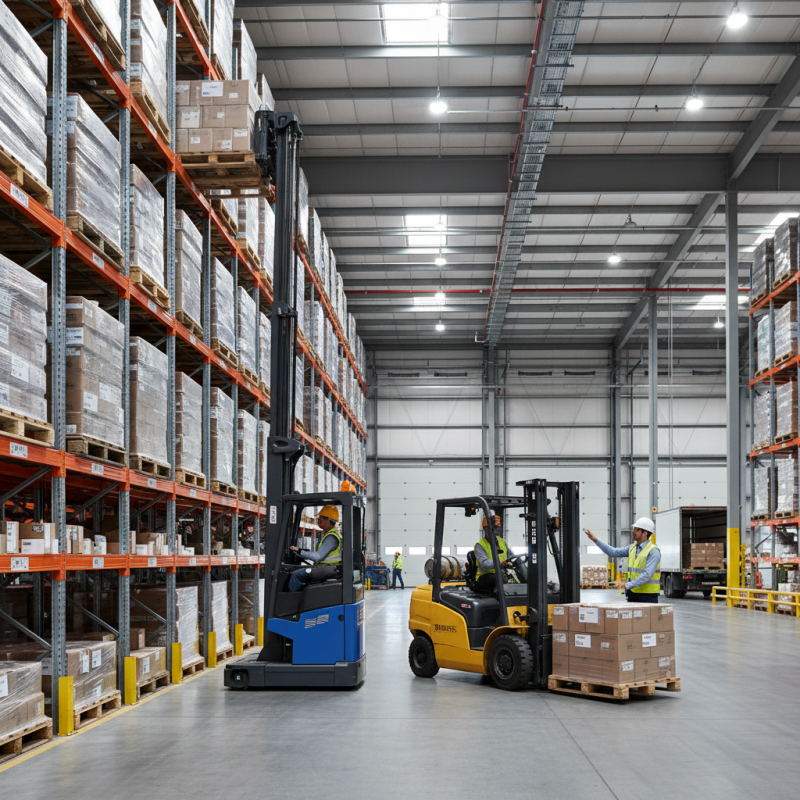
Key Characteristics of Reach Trucks
Reach trucks are specialized forklifts designed for high-density warehouse operations. They excel in narrow aisles where traditional forklifts may struggle. Their ability to extend their forks allows them to reach high shelves. This capability maximizes vertical space utilization, which is essential in modern warehouses.
One notable feature is the operator's position. Reach trucks often have a seated or stand-up operator design, enhancing visibility and maneuverability. This improves safety and efficiency when navigating tight spaces. Moreover, the reach mechanism is distinct. It allows operators to handle pallets without moving the machine, saving time during loading and unloading.
While reach trucks offer many advantages, they do have limitations. For instance, they may not be as stable on uneven surfaces compared to counterbalance forklifts. Operators require training to ensure they use these machines safely. The reliance on electric power can also pose challenges in certain environments where battery charging stations are limited. Each of these factors should be considered when choosing the right equipment for specific tasks.
Key Differences Between Reach Trucks and Forklifts
This bar chart illustrates key differences between reach trucks and forklifts in terms of lift height, load capacity, aisle width, and operational cost. Reach trucks are ideal for narrow aisles and higher lifts, while forklifts offer greater load capacity but require wider aisles.
Key Characteristics of Forklifts
Forklifts are essential in warehouses and construction sites. Their primary role is to lift and move heavy loads efficiently. They come in various designs and sizes, making them versatile for different tasks. Typically, forklifts can handle a significant weight, often exceeding several tons. Their stability and control make them ideal for transporting materials over short distances.
One key characteristic of forklifts is their lifting mechanism. Many models use a hydraulic system to adjust the height of their forks. This allows operators to load and unload pallets with ease. Forklifts also have solid wheels, which provide good traction on various surfaces. However, they may struggle on uneven ground or in tight spaces.
Another important aspect is operator training. Safety is paramount when using forklifts. Employers need to ensure that operators understand the machine's functions and limitations. Regular maintenance check-ups are crucial to prevent accidents. Some forklifts lack advanced safety features, making them less reliable in certain environments. Understanding these characteristics can help businesses make informed decisions about their lifting equipment.
Comparative Analysis of Reach Trucks and Forklifts
When comparing reach trucks and forklifts, the essential difference lies in their design and functionality. Reach trucks feature extended forks that can elevate loads to greater heights. They are ideal for narrow aisles, maximizing storage space. According to a 2022 industry report, reach trucks can increase warehouse storage capacity by 30%. In contrast, forklifts are more versatile for outdoor use. Their robust build allows them to handle heavier loads but may require wider aisles.
In warehouse operations, reach trucks excel in confined environments. They can maneuver in tight spaces while efficiently retrieving pallets from high shelves. However, they have limitations. They might lack the heft and stability needed for certain outdoor tasks. On the other hand, forklifts are adaptable, making them suitable for various environments. An estimated 40% of businesses reported that using forklifts improved their loading efficiency.
Tips: Always assess your warehouse layout before deciding on equipment. If your space is limited, reach trucks may be more effective. However, for heavier outdoor loads, consider the robustness of forklifts. Regular training helps operators understand equipment limitations and ensures safety. Evaluate equipment condition frequently to maintain optimal performance.
Ideal Use Cases for Reach Trucks versus Forklifts
When choosing between a reach truck and a forklift, understanding their ideal applications is crucial. Reach trucks excel in narrow aisles and limited spaces. According to a recent industry report, these vehicles can operate in aisles as narrow as 6 feet. This efficiency allows for higher storage density. In contrast, forklifts are versatile tools, suited for both indoor and outdoor tasks. They can lift loads higher than reach trucks, making them ideal for loading and unloading from trucks.
In warehouse settings, the choice between these two can significantly impact operations. Surveys indicate that reach trucks are preferred in distribution centers and retail warehouses. These locations often have vertical storage needs, where maximizing space is key. On the other hand, forklifts are commonly used in construction sites and manufacturing plants. They provide the flexibility required for various terrains. However, not all forklifts are designed for tight spaces, which can lead to inefficiencies.
While both machines serve unique purposes, the decision often depends on specific operational requirements. Some facilities may find reach trucks challenging for heavy-duty tasks. Conversely, forklifts may struggle in extremely confined areas. Analyzing the specific needs of a warehouse or construction site is essential for making an effective choice. Balancing efficiency and adaptability can be a complex process.
Maintenance and Operational Differences Between the Two Types
Reach trucks and forklifts serve similar purposes in material handling, yet their maintenance and operational needs significantly differ. Reach trucks are designed for narrow aisles. They require precise adjustments to maintain their stability and performance. Regular checks on the mast and forks are essential. Forklifts, on the other hand, are more versatile and can handle heavier loads, but they often require more comprehensive maintenance schedules. According to the Industrial Truck Association, proper maintenance can reduce equipment downtime by up to 25%.
Operationally, reach trucks are typically used in warehouses with high storage racks. Their design allows for lifting loads to greater heights. However, this means that operators must undergo specific training. Training is crucial to avoid accidents due to the truck's unique capabilities. Forklifts, though versatile, can struggle in tight spaces. Operators need awareness of their surroundings, especially in busy environments. Misjudgments can lead to costly damages or injuries.
Interestingly, both types of equipment share a lifespan range of about 10,000 to 20,000 hours. However, their wear patterns differ. Reach trucks may show accelerated wear on electrical components, while forklifts often experience more mechanical wear and tear. Each machine has its own maintenance pitfalls requiring attention. Ignoring these could lead to unexpected breakdowns. This highlights the importance of tailored maintenance strategies based on the equipment type in use.
FAQS
: Forklifts lift and move heavy loads efficiently. They are essential in warehouses and construction sites.
Many forklifts use a hydraulic system to adjust the height of their forks, aiding loading and unloading.
Forklifts have solid wheels for traction, but they struggle on uneven ground or in tight spaces.
Training ensures that operators understand machine functions. This helps to maintain safety and reduce accidents.
Reach trucks have extended forks for higher elevation. Forklifts are more versatile for outdoor use.
They excel in narrow aisles and can retrieve pallets from high racks efficiently.
They need precise checks on the mast and forks to maintain stability and performance.
Reach trucks wear on electrical components, while forklifts experience more mechanical wear and tear.
Both types typically last between 10,000 to 20,000 hours depending on usage and maintenance.
Conclusion
In exploring the question, "What is the difference between a reach truck and a forklift?", it becomes clear that these two types of material handling equipment serve distinct purposes and are designed with unique characteristics. Reach trucks are specifically engineered for operating in tight spaces, with extended forks allowing them to reach high shelves in warehouses. They are best suited for narrow aisle applications and storage facilities where maximizing vertical space is crucial.
On the other hand, forklifts are more versatile and can handle a wider array of tasks, including outdoor operations. They come in various types and configurations, making them ideal for loading and unloading heavy materials across different terrains. Understanding the ideal use cases, along with the maintenance and operational differences, is essential for selecting the right equipment to optimize efficiency in any given environment.

 Titan Forklift