What Is the Maximum Lifting Height for a VNA Truck?

Time:2026-10-29 Author:Sophia
0%

What is the maximum lifting height for a VNA truck? There is no single figure for every model. Many very narrow aisle trucks lift loads around 10 to 14 metres, while some purpose-built models can reach higher. The exact limit depends on the truck’s design, mast, attachments, and rated capacity. Check the manufacturer’s specifications for the specific model.

A headline lift height can be misleading. A truck may reach a high rack position with a light, correctly positioned load, yet have less capacity at that height. Load weight, load centre, mast configuration, and floor condition all matter. Picture a pallet of cartons moving above a warehouse aisle: its weight and dimensions can affect safe handling as the forks rise. Small details count.

This guide explains how to interpret VNA lifting-height specifications and what to check before matching a truck to a rack system. It also distinguishes maximum lift height from usable storage height, which can be affected by pallet dimensions and clearance requirements. The figures in product brochures are useful, but they are not the whole story. Real operating conditions can differ. A site assessment and the truck’s load chart provide a more dependable basis for selection. Even then, assumptions should be reviewed against the actual loads and aisle layout.
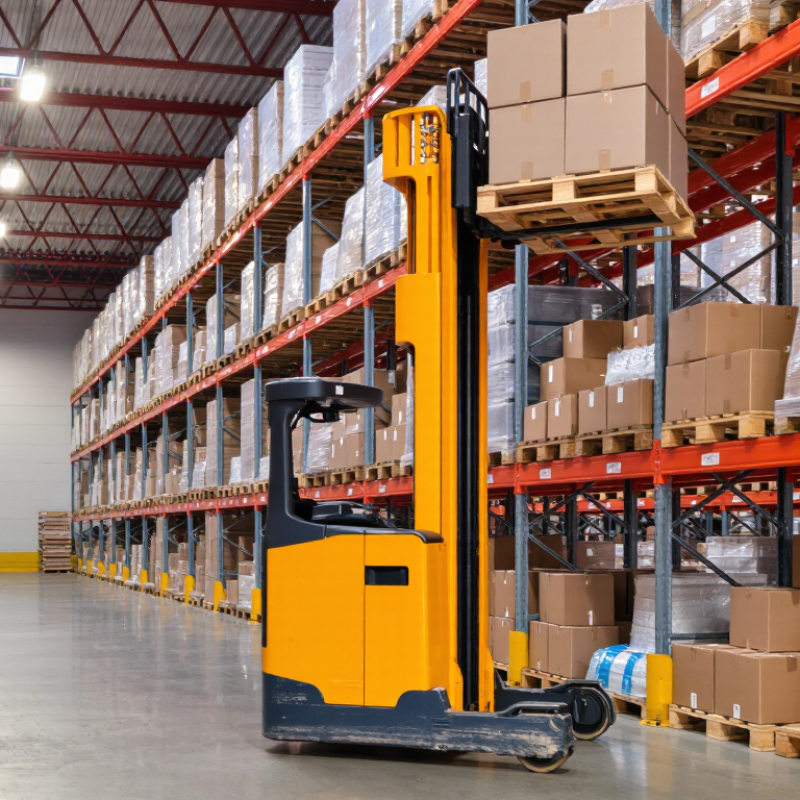
What Is the Maximum Lifting Height for a VNA Truck?

What Defines the Maximum Lifting Height of a VNA Truck?

A VNA truck’s maximum lifting height is not a single figure determined by the mast alone. Mast sections, carriage design, and the truck’s overall configuration all set physical limits. But the highest point the forks can reach is only part of the answer. Not just the mast.

The load matters. A truck may lift an empty fork carriage higher than a heavy pallet, because rated capacity can decrease as lift height increases. Load weight, load centre, and pallet dimensions affect stability and usable capacity. Check the capacity chart for the exact truck configuration and load, rather than relying on a headline height. That matters.

Building conditions define the practical limit, too. Measure clear height beneath beams, lights, sprinklers, and door tracks; allow room for the load and mast movement. Floor condition and levelness also affect safe operation, especially when a truck is raised high in a narrow aisle. Small details count. I have seen planning focus on rack height while overlooking a low crossbeam. That is an easy mistake. Verify the truck’s rated capacity at the intended lift height, with the actual load and site measurements, before setting rack levels.

Typical Lifting Height Ranges for VNA Trucks

VNA trucks commonly lift loads to around 10–14 metres, which suits many high-bay warehouses. Some configurations reach approximately 16–18 metres, but these are not standard across every truck type. The stated maximum usually refers to fork height under specified conditions, not a guarantee that every pallet can be safely stored there. Load weight, mast design, and the truck’s configuration all matter. A light, stable pallet may be handled higher than a heavier or uneven one. Small differences in load centre can change the usable capacity.

Check the truck’s capacity chart alongside its maximum lift figure. Capacity often reduces as the forks rise, and the chart should match the actual attachment and load. Floor quality matters too. At great heights, a slight floor irregularity can affect mast movement and load stability. That detail is easy to overlook. Operators should confirm the required beam height, pallet dimensions, and clearance before choosing a lift range. A warehouse with 12-metre racks may need more than a 12-metre-rated truck, because the forks must clear the beam and place the pallet accurately. The exact working height is best verified against the truck specification and site conditions.

How Mast Design and Load Capacity Affect Lift Height

A VNA truck’s maximum lifting height is usually determined by its mast, not by aisle width alone.

Published equipment specifications commonly place VNA lift heights around 12–18 metres, with some high-bay configurations exceeding that range. Treat these figures as specification limits, not guaranteed working heights. Mast stages, ceiling clearance, floor level, and the truck’s rated capacity all matter. A tall mast can reach the upper rack beam, yet the truck may not safely lift its full rated load there.

Capacity falls as the load rises and shifts away from the mast. The load’s weight, dimensions, and centre of gravity affect stability; a long pallet can reduce usable capacity even when it seems light.

OSHA’s powered industrial truck rule, 29 CFR 1910.178(o)(2), requires capacity markings to remain legible, while ISO 22915-1 sets stability-test requirements for industrial trucks. Check the truck’s capacity plate and residual-capacity chart at the intended lift height.

Small details count. A floor dip beneath one wheel or a pallet leaning forward can change the real operating margin.

It is tempting to choose a truck by its maximum height alone. That shortcut deserves a second look.

How to Identify a Truck’s Rated Maximum Lifting Height

To identify a VNA truck’s rated maximum lifting height, check its data plate and operator manual. Look for “maximum lift height” or “fork elevation,” usually measured from the floor to the top of the forks. Do not confuse this figure with overall mast height. That is a different measurement.

Read the capacity details beside the height rating. A truck may lift less weight at its highest position, especially when the load center changes or an attachment is fitted. Compare your load’s weight and dimensions with the plate, not just the headline height. Small print matters. If the plate is missing or hard to read, ask a qualified service professional to verify the truck’s specifications before use.

Then check the actual setup: mast configuration, attachment, and load all affect usable lift height. A tall pallet can reach the rack sooner than expected. Measure the rack opening and leave clearance for accurate placement. The rated figure is useful, but it does not guarantee every load can be lifted safely to that level. Floor condition and mast movement deserve attention too. That part is easy to overlook.

What Is the Maximum Lifting Height for a VNA Truck?

Indicative maximum lift-height ranges vary by truck model and mast configuration.

VNA trucks commonly reach higher storage levels than other truck types, but the exact rated maximum lifting height is model-specific. Check the truck’s data plate and specification sheet, matching the model and mast configuration. Maximum lift height does not indicate how much weight the truck can safely lift at that height; check the load chart as well.

Safety Considerations at Maximum Lifting Height

A VNA truck’s maximum lifting height depends on its model, mast configuration, load, and site conditions. The number on a specification sheet is not a safe working target by itself. Check the truck’s capacity plate and operating manual before lifting, especially when the load is long, uneven, or close to the rated limit. At height, even a small shift in the load can affect stability. Keep forks level, engage the load fully, and avoid sudden movements. Take your time.

Before raising a load, inspect the floor for cracks, debris, or uneven joints that could unsettle the truck. Look up, too: beams, lights, sprinklers, and stored goods can reduce overhead clearance. A spotter may help in areas with restricted visibility, but must remain outside the truck’s travel path. Raise only when the truck is stationary, and lower the load before moving unless the manual specifically permits otherwise. Follow site procedures and use trained operators. It is tempting to trust a familiar aisle, but small changes in the floor or load can matter. Stop and reassess if the truck feels unstable or the load shifts. Safety margins are easy to overlook when work is rushed.

What Is the Maximum Lifting Height for a VNA Truck? - Safety Considerations at Maximum Lifting Height
Topic Representative Information Safety Consideration
Common VNA lift-height range Many very narrow aisle (VNA) truck configurations operate at lift heights of approximately 10–15 m. Confirm the truck’s rated lift height and capacity on its data plate and in the manufacturer’s load chart; the range is not a specification for every truck.
High-reach configurations Some specialized models are designed to lift loads to approximately 16–18 m or higher, depending on the configuration. Use only a truck specifically rated for the required height, load, and operating conditions. Do not infer capability from mast height alone.
Capacity at maximum height There is no single standard capacity at maximum lift height. Rated capacity varies with lift height, load center, mast configuration, and any fitted attachment. Check the applicable residual-capacity rating for the exact truck and load. Never exceed the rating or rely only on the truck’s nominal capacity.
Load stability A load’s weight distribution, dimensions, and load center affect stability and the truck’s available capacity. Keep the load stable and within the permitted load center. Raise or lower it smoothly, and avoid turning or sudden movements with the load elevated.
Overhead clearance Required clearance depends on the truck, mast, load, rack, building services, and the highest point reached during travel or lifting. Verify the full operating envelope against racks, lights, sprinklers, beams, and other obstructions before use. There is no universal clearance value suitable for every installation.
Floor and rack condition Floor levelness, floor condition, rack condition, and rack capacity are site-specific factors in high-level operations. Use the truck only on suitable, maintained floors. Confirm that storage locations and rack beams are approved for the intended loads and loading arrangement.
Guidance and aisle controls VNA operations may use rail guidance or wire guidance, depending on the truck and warehouse installation. Follow the site’s guidance-system procedures and keep the aisle clear. Do not bypass guidance or operating controls unless an approved procedure allows it.
Operator visibility At elevated positions, the load or mast can limit the operator’s view of the forks, rack, or surrounding area. Use the truck’s approved visibility aids and follow site procedures for positioning and placing loads. Keep people clear of the truck and elevated load.
Pre-use checks Checks should follow the truck manufacturer’s instructions and the workplace inspection procedure. Inspect controls, brakes, steering, forks, mast, chains, tires, and any guidance equipment. Report defects and remove an unsafe truck from service.
Operator training Operators need training and authorization appropriate to the specific truck type and workplace. Ensure operators are familiar with high-level load handling, site traffic rules, emergency procedures, and the truck’s rated capacity information.
Important limitation Lift-height figures are indicative examples, not universal limits or a substitute for a truck’s technical documentation. The maximum safe lifting height is the limit stated for the specific truck configuration and load, operated in accordance with the manufacturer’s instructions and site risk controls.

FAQS

What determines a VNA truck’s maximum lifting height?

Mast sections, carriage design, and truck configuration set its physical limit. The load and site conditions affect usable height, too.

Is maximum fork height the same as mast height?

No. Maximum fork height measures how high the forks rise from the floor. Overall mast height is a different measurement.

How can I check a truck’s rated lifting height?

Read the data plate and operator manual. Look for “maximum lift height” or “fork elevation.” Small print matters.

Does load weight affect lifting capacity at height?

Yes. Capacity may decrease as the forks rise. Load weight, load centre, pallet size, and attachments can all affect safe capacity.

What should I measure before setting rack levels?

Measure rack openings and overhead clearance beneath beams, lights, sprinklers, and door tracks. Allow space for the load and mast movement. Small details count.

Why does floor condition matter when lifting high?

Cracks, debris, or uneven joints can unsettle a truck in a narrow aisle. Check the floor before raising a load.

What should operators do when lifting near maximum height?

Check the capacity plate and manual. Keep forks level, engage the load fully, and raise only while the truck is stationary. Take your time.

Can a truck travel with a raised load?

Lower the load before moving unless the operating manual specifically permits otherwise. Stop and reassess if the load shifts or the truck feels unstable.

What clearance mistake is easy to make?

Planning may focus on rack height and miss a low crossbeam. I have seen that overlooked. It is worth checking again.

Conclusion

What is the maximum lifting height for a VNA truck? It depends on the truck’s mast configuration, rated capacity, and operating setup. Many VNA trucks can lift loads to around 10–15 metres, though available heights vary by model and application. A taller mast may reach higher storage levels, but the truck’s capacity can decrease as the load rises, especially when handling heavier or oversized goods.

To identify the rated maximum lifting height, check the truck’s specification plate and manufacturer documentation, and confirm that the figures match the load and attachments being used. Operating at maximum height requires particular attention to load stability, mast condition, floor quality, aisle clearance, and the truck’s capacity limits. Keep loads secure and within the rated capacity, raise and lower them smoothly, and follow workplace operating procedures. The maximum listed height is a technical limit, not a guarantee that every load can safely be lifted to that level.

Sophia

Sophia

Sophia is a dedicated marketing professional with an exceptional depth of knowledge about her company's products and services. With a keen understanding of market trends and customer needs, she crafts insightful blog posts that not only inform but also engage readers, enriching the company’s online......