Forklift efficiency begins with the warehouse floor, not the truck’s engine. A poorly arranged facility creates longer travel paths, sharper turns, and unnecessary reversing. These small delays accumulate during every shift. They also increase congestion near receiving docks, storage aisles, and packing stations. So, how to optimize warehouse layout for forklift efficiency? The answer requires practical observation, accurate data, and disciplined planning.
Experienced warehouse teams usually begin by mapping product movement from arrival to dispatch. High-volume items should sit near outbound areas, while slower stock can occupy distant locations. Aisle widths must match the forklift model, load dimensions, turning radius, and expected traffic. Marked pedestrian lanes matter too. Clear separation reduces confusion around blind corners and busy intersections. Vertical storage can release valuable floor space, but rack height must suit equipment capability and operator visibility.
Measure real movement.
Track travel distance, waiting time, and repeated handling for several working days. A basic heat map may reveal that one popular pallet travels across the building unnecessarily. However, data can mislead when seasonal demand changes. A layout that works in March may fail during peak months. Flexibility deserves attention, even when the proposed design looks efficient on paper. Test one zone before changing the entire facility. Ask operators what slows them down; their practical knowledge often exposes details that software misses. No layout is perfect. Dust, damaged pallets, temporary stock, and human habits will challenge the plan. Continuous review keeps forklift routes safer, shorter, and more reliable.
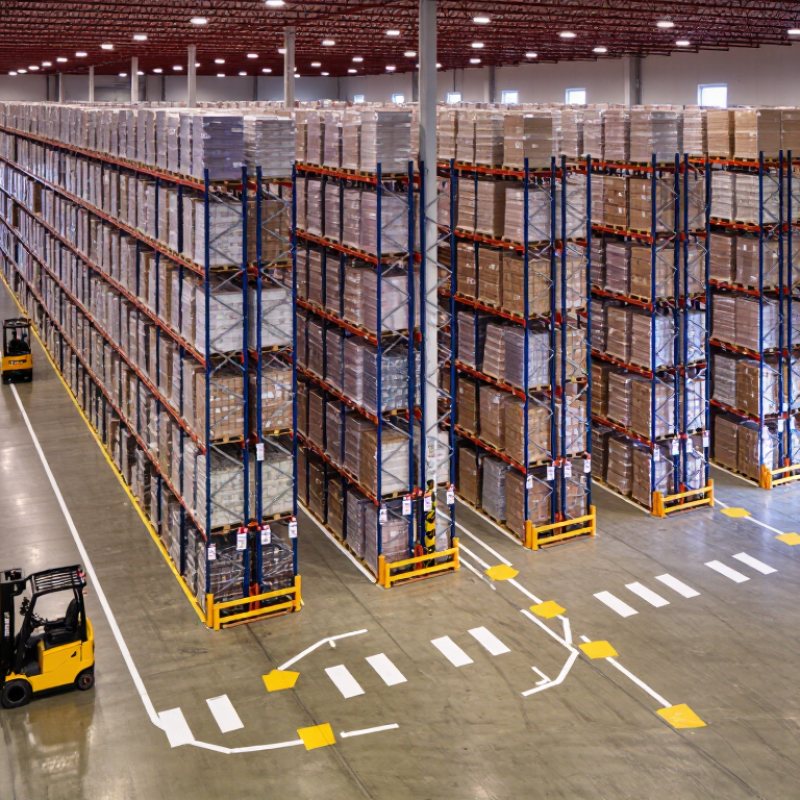
A reliable layout begins with a careful assessment of current warehouse conditions. Inspect floor quality, aisle width, lighting, rack stability, dock access, and ceiling clearance. Uneven flooring can reduce steering control and increase load movement. Measure turning areas with an actual forklift and its usual load, not an empty vehicle. That difference matters.
Track forklift movement during busy and quiet periods. Note repeated routes, sudden stops, blind corners, and areas where operators reverse frequently. Compare these routes with receiving, storage, picking, and shipping demands. Heavy or oversized loads may need wider aisles and larger turning zones. Pedestrian crossings should remain visible, controlled, and separate from routine forklift paths. Marking alone is not enough.
Watch the details.
A practical review may reveal that the shortest route is not the safest route. A direct path through a crowded packing area can create delays and near conflicts. Relocating fast-moving inventory closer to dispatch may reduce travel, but it can also increase congestion. Test changes with operators, supervisors, and maintenance staff. Their observations often expose problems that floor plans miss. Recheck travel time, stopping distance, visibility, and queue length after each adjustment. Some measurements may be incomplete. That is a reason to improve the assessment, not ignore it.
Check floor condition, aisle width, lighting, rack stability, dock access, and ceiling clearance. Uneven floors matter. They can reduce steering control and shift loads. Measure these conditions during busy and quiet periods.
Use the actual forklift with its usual load, not an empty vehicle. Measure the widest load, pallet overhang, and emergency access space. Add a practical buffer. “Just enough” space may fail during peak shifts.
Track repeated routes, sudden stops, blind corners, and frequent reversing areas. Compare them with receiving, storage, picking, and shipping demands. The shortest route may not be safest. That assumption deserves testing.
Use visible pedestrian lanes, controlled crossing points, physical barriers, and one-way forklift routes. Do not rely on floor markings alone. Keep crossings away from routine forklift paths when possible. People need clear escape space.
Install convex mirrors at blind corners and brighter lights near rack ends. Keep labels facing the travel direction. Store tall or irregular loads away from intersections. A low shelf may improve sightlines but reduce storage capacity.
Place stop markings before corners, not inside them. Set speed limits according to floor conditions, visibility, load size, and traffic levels. Review loading hours carefully. A quiet layout can fail quickly then.
Track travel time, empty travel, queue duration, picking errors, battery changes, and near-miss locations. Use timed observations, traffic counts, location scans, and operator feedback. Compare results after every adjustment. Small changes can expose larger problems.
Operators notice awkward aisles, poorly placed columns, and difficult turns that drawings may miss. Night-shift workers may report lighting or visibility problems hidden during daytime checks. Their views can be incomplete, too. Still, ignoring them is worse.
Reassess the layout when congestion, near misses, long queues, or damaged goods increase. A shorter route may create more crossing traffic. If seconds are saved but safety worsens, revise the design. No layout stays perfect.
How to optimize warehouse layout for forklift efficiency? Start by assessing the facility’s size, floor condition, storage capacity, forklift types, load requirements, and daily movement patterns. Map the main traffic flows, receiving and shipping points, storage zones, staging areas, and material handling routes to identify congestion and unnecessary travel. A well-planned layout places racks, aisles, charging or service areas, and workstations where forklifts can access them easily while maintaining smooth, direct movement.
Safety and visibility should guide every design decision. Provide sufficient clearance around racks, intersections, doors, and pedestrian work areas, and use clear traffic controls to separate vehicles from people. Mark routes, improve lighting, and reduce blind spots wherever possible. Finally, measure travel time, loading efficiency, aisle utilization, near-miss frequency, and congestion regularly. Reviewing these results allows warehouse teams to adjust storage locations, traffic patterns, and work zones so the layout continues to support safe, efficient, and adaptable forklift operations.

 Titan Forklift