How to Prevent Forklift Tipping Accidents in 2026?

Time:2026-09-23 Author:Isabella
0%

Forklift tipping accidents remain a serious workplace risk in 2026. A loaded forklift can become unstable within seconds. One sharp turn, uneven surface, or raised load may change everything. How to prevent forklift tipping accidents? The answer begins with controlling stability, speed, load weight, and operator decisions.

This guide examines practical prevention methods used in warehouses, factories, and loading areas. It covers daily inspections, correct load placement, safe travel speeds, and clear pedestrian separation. Operators should keep loads low while moving. They should also watch for potholes, wet floors, ramps, dock edges, and hidden changes in floor height. A small warning sign can prevent a major event.

Real workplace experience shows that accidents rarely have one cause. Sometimes production pressure influences a rushed decision. Sometimes a damaged tire is overlooked. That mistake matters. Manufacturer instructions, formal operator training, and site-specific risk assessments provide a stronger foundation than assumptions. Supervisors should observe actual driving habits, not only completed checklists. However, no prevention plan is perfect. Conditions change, workers become distracted, and equipment ages. Regular review is necessary.

This article will explain how to recognize tipping hazards before they become emergencies. It will also discuss safe load handling, stability triangles, turning practices, ramps, and emergency responses. The goal is not merely to reduce damage. It is to protect operators, nearby workers, inventory, and essential equipment. Small habits help. Reliable safety comes from consistent action, honest reporting, and continuous improvement.
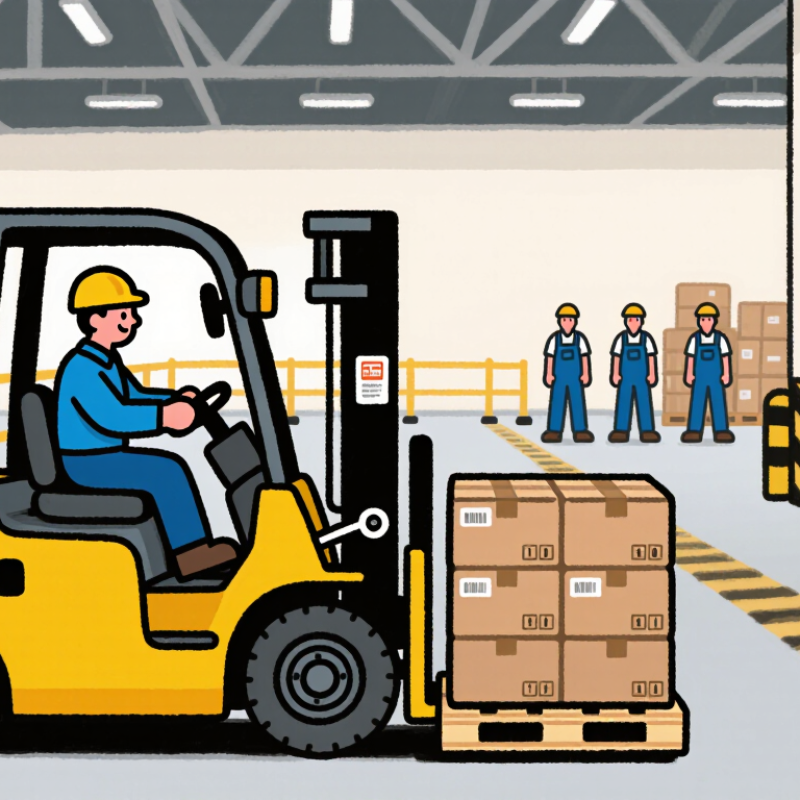
How to Prevent Forklift Tipping Accidents in 2026?

Understanding the Main Causes of Forklift Tipping Accidents

Forklift tipping accidents rarely begin with one dramatic mistake. They usually develop through small decisions that change the truck’s balance. The load may sit too high, lean forward, or exceed the rated capacity. Even a suitable load can become unstable when its center shifts. A wet patch, damaged floor, or steep ramp adds another risk. Turning too quickly makes the rear wheels swing wide and reduces stability. Keep loads low. Slow down before corners. These actions sound simple. They are often ignored during rushed shifts.

Daily warehouse observations reveal another major cause: poor visibility. Drivers may raise a load to see beneath it, then travel with the mast elevated. This raises the center of gravity and leaves less room for correction. Uneven tire wear, weak brakes, and loose steering parts can worsen the problem. Pre-shift checks should cover forks, chains, tires, brakes, steering, and warning devices. Training should include real routes, tight corners, ramps, and pedestrian movement, not only classroom diagrams. A supervisor should observe normal work, including reversing and turning under pressure. I have seen experienced operators skip checks because a truck looked fine. That assumption deserves challenge. Familiarity can hide danger.

Assessing Workplace Hazards Before Forklift Operations

How to Prevent Forklift Tipping Accidents in 2026?

Assessing Workplace Hazards Before Forklift Operations

A safe forklift operation begins before the engine starts. Walk through the route and inspect every surface, corner, and loading area. Look for potholes, loose gravel, wet floors, damaged ramps, and weak edges near docks. Measure doorway heights and check overhead pipes. Confirm that aisles provide enough turning space for the forklift and its load. In practical inspections, poor visibility often creates more risk than speed. A checklist helps, but it can still miss a small floor change or a newly stored pallet.

Tips: Keep the load low and centered during travel. Mark uneven surfaces clearly. Separate pedestrians with visible barriers and planned crossing points. Check the load weight, shape, and stability before lifting. Do not rely only on familiar routes. Work areas change during busy shifts.

Operators should also assess conditions that are easy to overlook. Bright sunlight can hide a person near an entrance. Rain may make an outdoor ramp dangerously slick. A tall load can block forward vision, requiring a safe travel direction and a spotter. Confirm that warning alarms, brakes, tires, forks, and seat restraints work correctly. Stop the task when conditions change. That decision may feel inconvenient, but continuing can turn a minor hazard into a rollover. I have seen teams focus heavily on equipment checks while ignoring rushed pedestrians, which remains a serious weakness.

Applying Safe Load Handling and Stability Practices

How to Prevent Forklift Tipping Accidents in 2026?

Applying Safe Load Handling and Stability Practices

Forklift stability depends on load weight, load position, travel speed, and ground conditions. Check the capacity plate before lifting, not after the load is raised. Keep the load centered between the forks, with both forks fully inserted. Heavy items should stay low and close to the mast. Never lift a load that blocks your forward view. Travel in reverse when visibility is limited, while watching pedestrians and floor edges.

Tips

Keep loads within the rated capacity. Secure unstable cartons before movement. Tilt the mast slightly backward during travel. Slow down before turning, especially on ramps or wet floors. Keep the load downhill when operating on a slope. Do not turn across an incline. Inspect forks, tires, brakes, and hydraulic controls before each shift. A small defect can become a serious stability problem. Seat belts matter.

Operators also need clear judgment. A pallet may weigh less than the rated limit but still create danger if its weight is unevenly distributed. Long or liquid-filled loads can shift suddenly during braking. Stop on level ground before adjusting a load. Ask for help when visibility, clearance, or balance seems uncertain. Experienced teams review near misses, not only injuries, because unsafe habits often appear before an accident. Even careful operators misjudge space sometimes. That weakness deserves honest attention, not blame.

How to Prevent Forklift Tipping Accidents in 2026? — Applying Safe Load Handling and Stability Practices
Risk Dimension Evidence-Based Safety Requirement Measurable Operating Practice Tipping Risk Verification Method Reference
Load weight Never lift or transport a load that exceeds the forklift's rated capacity or the capacity shown on its data plate. Confirm the total load weight, including packaging and attachments, before lifting. Stop work if the weight or load center is unknown. Critical Compare the load information with the capacity plate during the pre-use inspection. OSHA 29 CFR 1910.178(a)(4)
Load center A load placed farther forward than the rated load center reduces the forklift's remaining capacity and stability. Keep the load as close to the mast as practicable and verify the actual load center against the manufacturer's capacity chart. Critical Check the load dimensions, center of gravity, attachment position, and capacity chart before handling. OSHA 29 CFR 1910.178(a)(4); manufacturer capacity data
Fork engagement Both forks should be positioned evenly and inserted as far as practicable beneath the load to prevent shifting. Center the load on the forks, keep the forks spread evenly, and do not lift a load with only one fork. High Observe fork position from the operator's seat and conduct a low-level test lift before traveling. OSHA 29 CFR 1910.178(o)(1)
Travel height Loads should be carried low enough to maintain forward visibility and reduce the effect of a raised center of gravity. Travel with the load approximately 4–6 inches above the floor when site conditions and the truck design permit; follow the equipment manual where it specifies a different clearance. High Include fork height and mast position in routine operator observations. OSHA 29 CFR 1910.178(n)(6)
Mast position The load should generally be tilted back during travel when the forklift design and load characteristics allow it. Keep the mast tilted back only enough to stabilize the load; keep the mast vertical when placing or retrieving loads at height. High Verify mast angle during start-up checks and supervisor observations. OSHA 29 CFR 1910.178(n)(6); operator manual
Turning and speed Sharp turns, sudden braking, and excessive speed can move the combined center of gravity outside the stability triangle. Slow down before turns, keep the load low, avoid abrupt control movements, and operate only at a speed that permits a safe stop. Critical Use marked speed limits where appropriate and review telematics or observation data when available. OSHA 29 CFR 1910.178(n)(8)
Ramps and inclines On grades greater than 10%, loaded trucks must be driven with the load upgrade; the load must remain elevated enough to clear the driving surface. Travel straight up or down the grade, avoid turning on the incline, and keep the load upgrade as required by the operating direction. Critical Inspect ramp condition, grade, edge protection, traction, and clearance before use. OSHA 29 CFR 1910.178(n)(7)
Uneven or damaged surfaces Potholes, dock edges, debris, wet floors, and soft ground can destabilize a forklift or cause a wheel to drop. Remove debris, repair floor defects, maintain adequate lighting, and reduce speed when surface conditions change. High Complete a documented workplace inspection at the start of each shift and after reported changes. OSHA 29 CFR 1910.178(p)(1); site risk assessment
Dock edges and elevated platforms Unprotected edges and unsecured loading docks create a severe overturn and fall hazard. Keep a safe clearance from edges, secure dockboards, confirm trailer restraint, and verify dock capacity before entry. Critical Use a dock-entry checklist and inspect dockboards, trailer floors, restraints, and edge protection. OSHA 29 CFR 1910.178(m)(7), (m)(8), and (n)(1)
Visibility When the load blocks forward visibility, the operator should travel in the direction that provides the clearest view. Travel in reverse when safe, use a spotter when necessary, and stop if pedestrians or obstructions cannot be seen. High Check pedestrian routes, mirrors, warning systems, and visibility at intersections. OSHA 29 CFR 1910.178(n)(6) and (n)(4)
Pedestrian interaction Forklifts must be operated at a safe distance from pedestrians, with warning given at blind intersections and other hazardous locations. Separate pedestrian and vehicle routes where possible; use barriers, marked crossings, horns, and spotters based on the risk assessment. Critical Audit traffic routes, crossing compliance, and near-miss reports. OSHA 29 CFR 1910.178(h)(2), (n)(1), and (n)(4)
Seat belts and operator restraint Where a powered industrial truck is equipped with an operator restraint system, it must be used as designed. Buckle the seat belt before moving and never jump from a tipping truck; remain seated, hold firmly, and lean away from the direction of the overturn. Critical Include restraint use in daily observations and corrective-action reviews. OSHA 29 CFR 1910.178(e)(5)
Attachments and unusual loads Attachments can change capacity, visibility, load center, and the forklift's stability characteristics. Use only approved attachments, update capacity information when required, and train operators on the attachment's specific limitations. High Inspect attachment locking mechanisms and verify the revised capacity data before use. OSHA 29 CFR 1910.178(a)(4) and (a)(5)
Pre-use inspection Industrial trucks must be examined before being placed in service, and unsafe trucks must be removed from service. Inspect tires, forks, mast, chains, hydraulics, brakes, steering, horn, lights, alarms, battery or fuel system, and seat belt. High Record the inspection before each shift or operating period and tag out defects immediately. OSHA 29 CFR 1910.178(q)(7)
Operator competence Only trained and authorized operators may operate powered industrial trucks. Provide formal instruction, practical training, and workplace evaluation before authorization; conduct refresher training after unsafe operation, accidents, or workplace changes. Critical Maintain training records and complete operator evaluations at least once every three years. OSHA 29 CFR 1910.178(l)(1), (l)(4), and (l)(6)
Parking and unattended trucks An unattended forklift must be secured so it cannot move or create a hazard. Fully lower the forks, neutralize controls, set the parking brake, switch off power, and block wheels when parked on an incline. Medium Include parking position and fork height in end-of-shift checks. OSHA 29 CFR 1910.178(m)(5) and (m)(6)
Reference basis: U.S. OSHA Powered Industrial Trucks requirements, 29 CFR 1910.178. Always follow the forklift manufacturer's current capacity plate, operator manual, applicable local regulations, and site-specific risk assessment.

Training Operators and Enforcing Daily Safety Procedures

How to Prevent Forklift Tipping Accidents in 2026?

Operator training must go beyond a classroom certificate. Workers should practise turning, braking, load positioning, and ramp travel in realistic conditions. A loaded forklift behaves differently from an empty one. Operators need to feel that difference safely. OSHA estimates that forklifts cause about 85 workplace deaths and 34,900 serious injuries annually in the United States. OSHA also reports that overturns cause roughly one-quarter of forklift fatalities.

Daily procedures often prevent the first mistake. Before each shift, operators should inspect tyres, forks, mast chains, steering, brakes, warning devices, and seat belts. They should record defects and remove unsafe equipment from service. Supervisors must check that loads stay within the rated capacity. A heavy pallet raised too high can shift suddenly, especially on uneven flooring. Speed limits, marked pedestrian routes, and clear visibility rules need consistent enforcement. Not just during audits. A rushed inspection is not an inspection. That deserves honest review.

Tips: Keep loads low while travelling. Approach ramps straight, with the load uphill. Slow down before corners, not during them. Never turn on a slope. Use a spotter when visibility is blocked. Refresh training after near misses, equipment changes, or unsafe behaviour. The National Safety Council’s workplace safety guidance supports regular hazard assessment and documented training. In practice, managers should review inspection records weekly, speak with operators, and correct repeated shortcuts. Checklists can become routine paperwork. Make them practical, visible, and occasionally question their value.

Forklift incidents are associated with a substantial annual injury burden. Preventive priorities for 2026 include operator training and evaluation, pre-shift equipment inspections, load-limit enforcement, pedestrian separation, seat-belt use, and immediate correction of unsafe conditions. Values are OSHA estimates for powered industrial truck incidents in the United States.

Source: U.S. Occupational Safety and Health Administration, “Powered Industrial Trucks—Forklifts.”

Responding to and Learning From Forklift Tipping Incidents

A forklift tipping incident demands a calm, structured response. Stop nearby equipment and keep people away from the danger zone. Do not rush toward the fallen load or machine. A damaged mast, leaking battery, or unstable pallet can create another injury.

Call the site emergency lead and provide clear facts. State where the incident happened, what the forklift was carrying, and whether anyone is trapped or hurt. Preserve the scene when it is safe. Record tire marks, load position, surface conditions, and warning signs. Take photographs from several angles. Small details often explain large failures.

The investigation should examine decisions, not just operator behavior. Was the load within capacity? Was it raised too high while turning? Did a ramp, wet floor, poor lighting, or blocked view influence the event? Interview witnesses separately, while memories remain fresh. Our own review may reveal uncomfortable gaps. A checklist existed, but nobody checked it. Training was completed, yet the task was unfamiliar. That is not a minor weakness.

Convert findings into specific controls. Repair damaged flooring, change traffic routes, lower storage heights, or improve pedestrian separation. Practice emergency reporting with realistic scenarios. Refresh operator training after equipment, route, or load changes. Track repeated near misses, not only completed incidents. A near miss is useful evidence. Review the corrective actions after thirty days. If behavior has not changed, the solution was incomplete.

FAQS

How can operators prevent a forklift from tipping?

Check the capacity plate before lifting. Keep the load centered, low, and close to the mast. Slow down before turns. Never turn across an incline.

Why does load position affect forklift stability?

A heavy load raised high can shift the forklift’s balance. Keep both forks fully inserted. Uneven weight distribution can be dangerous, even below the rated limit.

What should operators do when a load blocks forward visibility?

Travel in reverse when safe, while watching pedestrians, edges, and nearby equipment. Use a spotter when visibility remains blocked. Do not guess.

How should forklifts operate on ramps?

Approach ramps straight. Keep the load uphill. Reduce speed before entering the ramp. Avoid turning on slopes or wet flooring.

What should be inspected before each shift?

Check the forks, tyres, brakes, steering, mast chains, hydraulics, warning devices, and seat belt. Record defects immediately. Remove unsafe equipment from service.

Why is operator training important beyond a classroom certificate?

Operators should practise braking, turning, load positioning, and ramp travel. Training must include realistic conditions. A loaded forklift feels different from an empty one.

How can supervisors improve daily forklift safety?

Enforce capacity limits, speed rules, marked pedestrian routes, and visibility procedures. Review inspection records weekly. Correct repeated shortcuts before they become normal.

What should teams learn from near misses?

Near misses can reveal unsafe habits before injuries occur. Discuss them without blame. A checklist may become routine paperwork, so teams should question whether it still works.

Conclusion

Forklift tipping accidents can cause serious injuries, equipment damage, and operational delays, but many can be prevented through consistent planning and disciplined work practices. How to prevent forklift tipping accidents? Start by understanding common causes, including overloading, uneven surfaces, sharp turns, excessive speed, raised loads, and poorly balanced materials. Before each operation, operators should inspect travel paths, identify slopes, narrow aisles, obstacles, weak flooring, and changing workplace conditions. Loads must remain within the forklift’s rated capacity, centered on the forks, secured when necessary, and carried as low as practical while maintaining visibility and control.

Effective prevention also depends on properly trained operators and clear daily procedures. Operators should complete pre-use inspections, wear appropriate protective equipment, maintain safe distances, follow designated routes, and avoid sudden movements. Supervisors should reinforce these standards through regular training and monitoring. If a tipping incident or near miss occurs, the area should be secured, the event reported, and its causes reviewed. Using these lessons to improve equipment checks, site layouts, and operating procedures can reduce the risk of repeated accidents.

Isabella

Isabella

Isabella is a dedicated marketing professional with a sharp focus on driving brand growth and engagement through strategic content creation. With an extensive background in digital marketing, she combines her passion for storytelling with her keen understanding of industry trends to deliver......