Top 10 Ways to Reduce Fuel Consumption in IC Forklifts?

Time:2026-11-19 Author:Mason
0%

Fuel is one of the largest controllable operating costs for an internal-combustion forklift fleet. Yet consumption is rarely determined by engine size alone. Idling beside a loading dock, repeated hard acceleration, low tire pressure, and poorly planned travel can all burn fuel without moving more goods. Small habits add up.

The U.S. Environmental Protection Agency’s Greenhouse Gas Emission Factors Hub provides combustion factors of about 10.21 kilograms of carbon dioxide per gallon of diesel, 8.89 for gasoline, and 5.75 for propane. These figures describe emissions, not forklift fuel economy, but they show why every avoided gallon matters. Actual results vary with fuel type, load, terrain, maintenance, and shift pattern. A neat estimate can still miss a messy warehouse reality.

So, How to reduce fuel consumption in IC forklifts? The answer starts with measurable routines: track fuel per operating hour, check tire pressure and filters, reduce unnecessary idling, and match truck capacity to each load. The following ten methods focus on changes operators and fleet managers can verify, rather than promises of dramatic savings. Even a simple idle-time log helps. It is not perfect; operators may forget entries, and busy shifts change the numbers. Still, consistent records reveal where fuel is being used and which adjustments deserve a trial.
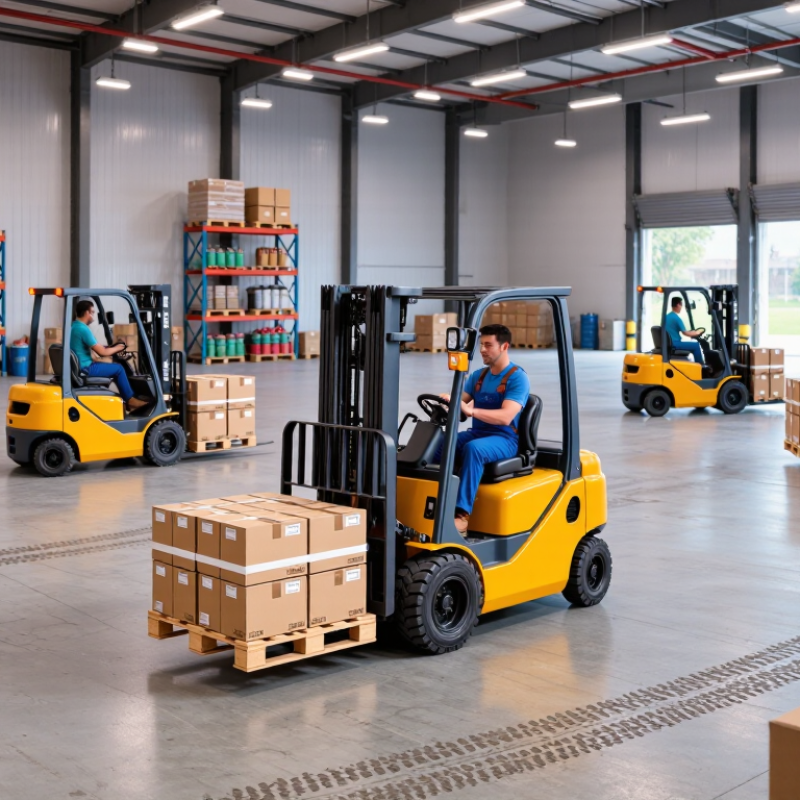
Top 10 Ways to Reduce Fuel Consumption in IC Forklifts?

Assess Fuel Use and Identify Operating Inefficiencies in IC Forklifts

Assess fuel use by task, not by tank size alone. Record gallons or litres, engine hours, operating hours, and pallets moved for each shift. Then calculate fuel per engine hour and per pallet. A forklift handling light loads may burn less overall but still waste fuel while idling. The first week is messy. Operators may miss entries, and refuelling times can cross shifts. Keep the log simple, and check meter readings against fuel receipts.

Compare unlike fuels carefully. The U.S. Energy Information Administration’s Monthly Energy Review lists approximate heat content of 91,500 Btu per gallon for propane and 137,000 Btu per gallon for diesel. Gallons alone can therefore distort comparisons; convert consumption to energy before judging performance. The U.S. Environmental Protection Agency’s 2024 Emission Factors Hub also provides separate per-gallon carbon dioxide factors for propane and diesel, useful for cross-checking fuel records. Look for repeat patterns: long idle periods, frequent short trips, low load utilization, or rising fuel per pallet. A blocked air filter or underinflated tires may contribute, but logs cannot prove the cause. Inspect the machine and speak with operators before changing routines. Some variation is unavoidable. The goal is to identify persistent inefficiencies, not punish one unusual shift.

Top 10 Ways to Reduce Fuel Consumption in IC Forklifts

Assess fuel use and identify operating inefficiencies. The bars show indicative potential fuel savings for each measure; results vary with equipment, site conditions, and operating practices.

Typical planning ranges are approximate, not guaranteed or additive. Establish a baseline using fuel consumed per operating hour, then compare results under similar workloads.

Maintain the Engine, Tires, and Fuel System for Efficient Operation

An IC forklift that suddenly uses more fuel often gives small clues first. Check the engine oil, coolant level, and air filter during routine service. A dirty filter can restrict airflow, while low coolant or poor lubrication may signal a maintenance problem. Keep the radiator and cooling fins clear of dust and chaff. Short checks matter. Follow the service interval in the operator’s manual, and have a qualified technician investigate unusual smoke, rough idling, or persistent power loss. A checklist helps, though busy shifts can make it tempting to rush.

Tires affect rolling resistance and stability. For pneumatic tires, check pressure against the manual’s specification; never guess from appearance alone. Solid tires need inspection for cuts, missing chunks, and uneven wear. Uneven wear can point to alignment or load-handling issues, not just worn rubber. Inspect fuel lines, connections, and filters for damage or seepage, and address leaks promptly. Keep the fuel cap secure and use the fuel type specified for the machine. Small habits can slip. I would also track fuel use by shift, since changing loads, rough floors, and long idling periods can distort comparisons. A simple log makes patterns easier to spot.

Optimize Load Handling, Travel Routes, and Forklift Speed

Fuel use often rises through small, repeated inefficiencies: half-empty trips, sharp turns, and unnecessary idling. Plan warehouse routes to combine nearby picks and avoid crossing the same aisle twice. Keep frequently handled pallets near dispatch, while checking that heavier loads travel only as far as needed. Smooth handling matters. Lift only when necessary, and avoid carrying raised loads over long distances; extra hydraulic work and repeated corrections consume fuel.

Speed needs steady control, not simply a lower setting. Accelerate gently, maintain a consistent pace, and slow before corners rather than braking late. The U.S. Department of Energy’s Alternative Fuels Data Center reports that a heavy-duty truck can use about 0.8 gallons of fuel per idling hour. That is not a forklift benchmark, but it shows why avoidable engine-on waiting deserves attention. Set practical waiting rules, then measure idle time and fuel by shift. One awkward detail: drivers may take longer routes to avoid congestion, so compare actual travel patterns before changing aisle plans. Small trials help. Track fuel per pallet moved, not just fuel per hour, and review the figures after busy shifts.

Reduce Idling Through Better Operator Habits and Work Scheduling

At a busy dock, an IC forklift can burn fuel while waiting for a pallet, a loading door, or a dispatch call. The U.S. Department of Energy’s Alternative Fuels Data Center cites about 0.8 gallons per hour for an idling heavy-duty truck. That is a useful comparison, not a forklift-specific rate. Even so, it shows why repeated idle minutes deserve attention. Small pauses add up. Supervisors can group nearby picks, stage incoming loads before trucks arrive, and assign clear tasks during shift handovers. Operators should switch off during longer waits when site procedures and the forklift manual allow it. Avoid constant stop-start routines; they may create wear and slow work.

Use engine-hour meters or telematics to identify where idling clusters, such as a congested charging-free staging lane or a break-period queue. Review the readings weekly with operators, rather than treating idle time as an individual failure. A simple log can record shift, task, and reason for waiting. Then adjust start times, delivery windows, or staffing around the bottleneck. Keep warm-up and cool-down practices within manufacturer guidance. One scheduling change may help one shift and disrupt another. Check the results before making it permanent. A tidy schedule will not solve every delay, but visible patterns give teams something concrete to improve.

Track Fuel Consumption and Refine Efficiency Practices

Top 10 Ways to Reduce Fuel Consumption in IC Forklifts?
Track Fuel Consumption and Refine Efficiency Practices

Treat every refuel as useful operating data, not just a purchasing record. Log gallons added, engine hours, shift length, and the task performed. A simple sheet or fleet system can reveal which shifts burn more fuel per operating hour. Add idle time and unusually heavy loads where practical. Small leaks matter.

Compare similar work, not unlike shifts. A forklift moving dense pallets in a cold warehouse should not be judged against one doing light, short runs. Check the fuel-per-hour trend weekly, then inspect high-use trucks for excessive idling, low tire pressure, clogged filters, or poor operating habits. Set a realistic baseline; a tidy spreadsheet can still hide messy data when refills are missed or engine-hour readings are mistyped.

Use a recognized conversion when reporting environmental impact. The U.S. EPA’s 2024 Greenhouse Gas Emission Factors Hub lists 8.887 kilograms of CO₂ per gallon of gasoline and 10.180 kilograms per gallon of diesel. These figures convert recorded fuel into estimated emissions; they do not measure forklift efficiency. Review the trend with operators and maintenance staff, then test one change at a time. Results may be uneven. That is still useful evidence.

Top 10 Ways to Reduce Fuel Consumption in IC Forklifts? - Track Fuel Consumption and Refine Efficiency Practices

# Efficiency Practice What to Do What to Track How to Refine
1 Reduce unnecessary idling Shut the engine down during suitable extended stops, following site procedures and the operator manual. Idle hours, engine hours, fuel used per shift Review idle time by shift and identify recurring waiting points or dispatch delays.
2 Plan routes and combine tasks Group nearby moves and reduce avoidable empty travel where workflow allows. Distance traveled, loaded and empty travel time, fuel per operating hour Compare travel patterns before and after route or task-sequencing changes.
3 Use smooth acceleration and braking Accelerate progressively, anticipate stops, and avoid repeated hard starts or abrupt braking. Fuel per operating hour, harsh acceleration or braking events if recorded Use operator coaching and compare like-for-like shifts or routes.
4 Maintain appropriate travel speed Follow site speed limits and adjust speed for loads, visibility, pedestrians, and floor conditions. Average travel speed, travel time, fuel per task or operating hour Balance fuel use with safe stopping distances and required task completion times.
5 Keep tires in serviceable condition Inspect tires for damage, wear, and correct fit; use the specified pressure for pneumatic tires. Tire condition, pressure where applicable, fuel per operating hour Correct maintenance issues promptly and compare fuel records under similar operating conditions.
6 Follow preventive maintenance schedules Maintain the engine, air intake, cooling system, fuel system, and other components as specified by the manufacturer. Service completion, fault codes, fuel per operating hour Investigate unexplained increases in fuel use alongside maintenance and fault records.
7 Match forklift capacity to the task Use equipment rated for the load, attachment, and load center; never exceed the capacity plate. Load weight, attachment use, fuel per completed move Review task allocation while keeping every lift within rated capacity and site safety rules.
8 Reduce unnecessary lifting and high engine speed Raise loads only as needed for safe travel and placement, and operate within the recommended engine-speed range. Lift cycles, engine hours, fuel per shift Observe work cycles and coach operators on smooth, task-appropriate control use.
9 Improve floor and work-area conditions Keep travel lanes clear and address surface defects that cause detours, repeated stops, or rough travel. Detours, travel time, reported floor defects, fuel per task Use operator reports and site inspections to prioritize repairs and remove route obstructions.
10 Track fuel consistently and review results Record fuel added and engine hours using consistent units and a repeatable process. Fuel per operating hour; optionally, fuel per pallet or completed move Compare similar equipment, tasks, shifts, and load conditions; investigate trends rather than isolated readings.

Tracking note: Fuel-per-hour comparisons are most useful when fuel records, engine hours, operating conditions, and measurement periods are consistent. Always follow the forklift operator manual and workplace safety procedures.

FAQS

What should a forklift fuel log include?

Record fuel added, engine hours, shift length, and pallets moved. Note the task and long waits when possible. The first week may look messy.

How can fuel use be compared fairly?

Compare similar tasks and calculate fuel per engine hour or pallet. Different fuels contain different amounts of energy, so gallons alone can mislead.

Why track idling separately?

A forklift may burn fuel while waiting at a dock or for a pallet. Small pauses add up. Track idle time and the reason for each wait.

How can teams reduce unnecessary idle time?

Stage loads before trucks arrive and group nearby picks. During longer waits, operators can switch off when site procedures and the manual allow it.

What patterns may point to wasted fuel?

Look for repeated long idle periods, short trips, low load use, or rising fuel per pallet. One unusual shift may not mean much.

What should happen when fuel use rises?

Inspect tire pressure, air filters, and the forklift. Ask operators about changing tasks or delays. Logs suggest clues, but cannot prove the cause.

How should fuel records be used to estimate emissions?

Apply a suitable fuel-specific conversion factor to recorded consumption. The result is an estimate, not a direct measure of forklift efficiency.

How can a team tell whether a change helped?

Test one adjustment at a time, then review comparable shifts weekly. Missing refills or mistyped meter readings can muddy the results. Logs are imperfect.

Conclusion

How to reduce fuel consumption in IC forklifts? Start by assessing current fuel use and identifying operating inefficiencies, such as unnecessary travel, excessive speed, or poor load handling. Regularly maintain the engine, tires, and fuel system so the forklift can operate efficiently. Carry loads steadily, choose practical travel routes, and use a suitable speed for the task and floor conditions.

Fuel use can also be reduced by limiting idling through better operator habits and work scheduling. Turn off the engine during extended pauses when appropriate, and coordinate tasks to avoid unnecessary waiting and repeated trips. Track fuel consumption over time and compare it with operating patterns to spot areas for improvement. By reviewing these practices regularly and refining them based on results, operators can reduce fuel waste while supporting reliable, productive forklift operation.

Mason

Mason

Mason is a seasoned marketing professional with a deep expertise in the company's offerings and a passion for driving brand awareness. With a strong background in digital marketing strategies, he has an innate ability to connect with diverse audiences and effectively communicate product benefits.......