Lithium-ion batteries are revolutionizing the material handling industry, particularly for forklifts. Industry expert Dr. Alex Thompson states, "Lithium-ion technology offers unmatched efficiency and longevity for forklift operations." So, why are lithium-ion batteries better for forklifts?
One major advantage is their efficiency. Lithium-ion batteries charge faster than lead-acid counterparts. They also have a higher energy density, allowing forklifts to work longer on a single charge. Additionally, they require less maintenance. This can lead to significant cost savings in the long run.
Another benefit of lithium-ion batteries is their environmental impact. They produce fewer emissions compared to traditional batteries. This not only helps companies meet sustainability goals but also improves workplace safety. However, it is crucial to assess the initial investment. Some companies might hesitate due to upfront costs. Therefore, understanding the total cost of ownership is essential.
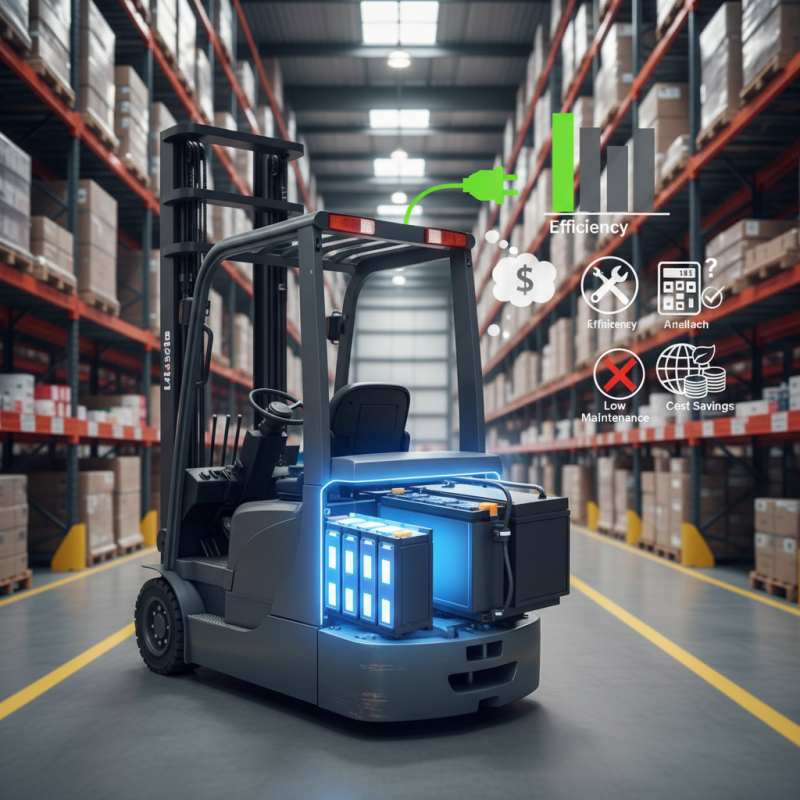
Advantages of Lithium Ion Batteries in Forklift Applications
Lithium ion batteries have emerged as a leading choice for forklift applications due to their numerous advantages. These batteries boast a higher energy density compared to traditional lead-acid batteries. This means they can store more energy in a smaller footprint, making them ideal for space-constrained environments. A report from the International Energy Agency states that lithium ion technology can provide up to 40% more usable energy than its counterparts.
Charging efficiency is another strong point. Lithium ion batteries can charge up to 80% in just one hour. This rapid charging reduces downtime, which is crucial in warehouse environments where time is money. According to the Battery University, this quick turnaround can enhance productivity levels by 20% or more. However, organizations need to invest in proper charging infrastructure to maximize these benefits.
Moreover, lithium ion batteries are virtually maintenance-free. Unlike lead-acid batteries, they do not require regular watering or cleaning. This not only saves time but also reduces operational costs. While the initial investment might be higher, the long-term savings can outweigh the upfront costs. Yet, companies should contemplate their specific usage patterns and total cost of ownership before making a switch.
Comparison of Lithium Ion Batteries with Traditional Lead-Acid Batteries
When comparing lithium-ion batteries with traditional lead-acid options, several factors highlight their advantages. Lithium-ion batteries charge faster, taking only a few hours to reach full capacity. In contrast, lead-acid batteries require longer charging times. This difference can significantly impact productivity. Faster charging means less downtime for forklifts, allowing for more operational hours.
Another essential point is lifespan. Lithium-ion batteries typically last twice as long as lead-acid ones. This extended lifespan reduces replacement costs and minimizes waste. Unlike lead-acid batteries, which may last around 1,000 cycles, lithium-ion can exceed 2,000 cycles. This longevity can lead to better long-term investments for businesses.
Weight and efficiency also matter. Lithium-ion batteries tend to be lighter. This weight reduction enhances forklift performance, increasing load capacity. While lead-acid batteries may be bulky, lithium-ion technology supports a more streamlined design. Both options have their merits, but businesses must weigh these factors and consider their specific needs for each application.
Efficiency and Performance Benefits of Lithium Ion Batteries
Lithium Ion batteries bring significant efficiency and performance advantages for forklifts. One prominent benefit is energy density. These batteries can store more energy in a smaller size compared to traditional lead-acid batteries. According to a report from the U.S. Department of Energy, lithium-ion batteries can reach energy densities of 150-200 Wh/kg, while lead-acid options typically max out around 30-50 Wh/kg. This allows for longer operational times and less frequent charging.
Charging times are another crucial factor. Lithium Ion batteries can often be fully charged in as little as one hour. This contrasts sharply with lead-acid batteries, which may require eight hours or more. As reported by industry experts, improved charging efficiency can lead to higher productivity levels in warehouses and distribution centers. Additionally, lithium-ion batteries maintain performance at varying temperatures better than their traditional counterparts.
However, the initial investment for lithium-based systems can be higher. This cost may deter some businesses. But, this technology often compensates for its price with lower maintenance needs and longer lifespans. Industry studies show that lithium batteries can last up to twice as long as lead-acid equivalents. Some complexities in integrating new systems can arise, requiring proper training and adaptation. These factors highlight the need for a thoughtful approach to adopting lithium-ion technology.
Environmental Impact and Sustainability of Lithium Ion Technology
Lithium-ion batteries are becoming essential for forklifts due to their environmental benefits.
Compared to traditional lead-acid batteries, lithium-ion technology significantly reduces greenhouse gas emissions.
According to the International Energy Agency, electric forklifts powered by lithium-ion technology can decrease
CO2 emissions by up to 35%. This shift aligns with global sustainability goals.
One major advantage of lithium-ion batteries is their energy efficiency.
They convert approximately 90% of energy from the grid into usable power.
In contrast, lead-acid batteries only achieve around 60% efficiency.
Therefore, using lithium-ion batteries can lower energy costs and promote responsible resource use.
However, it is essential to evaluate battery life; they typically last longer than conventional options but can be less affordable upfront.
Tips for businesses:
Consider battery recycling programs for lithium-ion batteries. Opting for such programs can further enhance sustainability efforts.
Also, invest in training employees on battery management. Proper care extends battery life and increases safety.
Regular assessments of forklift battery usage can lead to more informed decisions about efficiency and environmental impact.
Cost Analysis: Long-Term Savings with Lithium Ion Forklift Batteries
Lithium-ion forklift batteries offer significant long-term savings compared to traditional lead-acid options. According to industry reports, lithium-ion batteries have a lifespan of up to 10 years, vastly exceeding the 3-5 years typical for lead-acid. This longevity translates into fewer replacements and reduced disposal costs. In many cases, operations see an estimated 20% reduction in energy costs due to the higher efficiency of lithium-ion technology.
Moreover, lithium-ion batteries demand less maintenance. They don't require the same level of water refilling as lead-acid batteries. Statistics show that companies can save up to 15 hours of labor per month with less frequent maintenance needs. Furthermore, the quicker charging times allow for more flexibility in operations, reducing downtime by as much as 50%.
However, the initial investment can be daunting. Lithium-ion batteries generally have a higher upfront cost. This has led some businesses to hesitate. Yet, taking a long-term view, the return on investment can be palpable. Data indicates that operational efficiencies often make lithium-ion batteries the more economical choice over time. It's worth weighing both short-term costs and long-term gains before making a decision.
FAQS
: Lithium-ion batteries offer higher energy density, longer operational times, and better performance at varying temperatures compared to traditional batteries.
Lithium-ion batteries can be fully charged in about one hour, whereas lead-acid batteries may take eight hours or longer.
The upfront investment is higher and businesses may face challenges in integrating new systems; proper training is essential.
Lithium-ion batteries convert about 90% of energy into usable power, potentially leading to a 20% reduction in energy costs.
Lithium-ion batteries typically last up to 10 years, compared to 3-5 years for lead-acid batteries, thus reducing replacement frequency.
Recycling lithium-ion batteries enhances sustainability and reduces environmental impact, aligning with global sustainability goals.
Proper training on battery management can extend battery life and increase safety, which is often overlooked.
Yes, they require less maintenance, such as reduced water refilling, saving up to 15 hours of labor each month.
Businesses should balance initial costs with long-term savings and operational efficiencies when considering the switch.
Though the initial cost is higher, potential long-term savings on replacements and maintenance make it a worthwhile investment.
Conclusion
Lithium-ion batteries have emerged as the preferred power source for forklifts, and there are compelling reasons for this trend. One of the primary advantages is their efficiency and performance, which surpasses traditional lead-acid batteries. Lithium-ion batteries offer faster charging times, longer lifespans, and consistent power delivery, enhancing productivity in warehouse operations. Moreover, their lighter weight and compact size contribute to better maneuverability of forklifts.
Additionally, lithium-ion technology presents significant environmental benefits, as these batteries are more sustainable and have a lower carbon footprint compared to their lead-acid counterparts. In the long run, the cost analysis also favors lithium-ion batteries, showcasing potential savings on maintenance and operational costs. Thus, when considering the question, "Why are lithium-ion batteries better for forklifts?" the answer lies in their superior efficiency, reduced environmental impact, and overall economic advantages.

 Titan Forklift