Charging an electric forklift battery correctly? It starts with knowing the battery, charger, and shift schedule—not simply plugging in whenever the truck stops. Lead-acid and lithium-ion batteries have different charging needs, so check the manufacturer’s instructions before setting a routine. A mismatch can waste time, shorten battery life, or leave a forklift underpowered midway through a shift. Small details matter: the connector should be clean, the charging area well ventilated, and the battery allowed to cool when its instructions require it.
Industrial battery specialist Raymond L. Peterson sums up the mindset: “A reliable charge begins with the right match: the correct charger, the correct battery, and the correct routine.” Treat that as a practical reminder, not a substitute for your equipment manual. This guide’s ten tips cover inspection, charger compatibility, safe connections, charging windows, and everyday maintenance. Expect clear actions, such as checking for damaged cables and recording charge cycles. Some routines look simple on paper. Real shifts get messy; a battery may return late, or an operator may forget to log a partial charge. That is worth admitting. Consistency improves when the process is easy to follow and someone owns the checks. No shortcuts. The aim is dependable power, longer service life, and fewer avoidable interruptions.
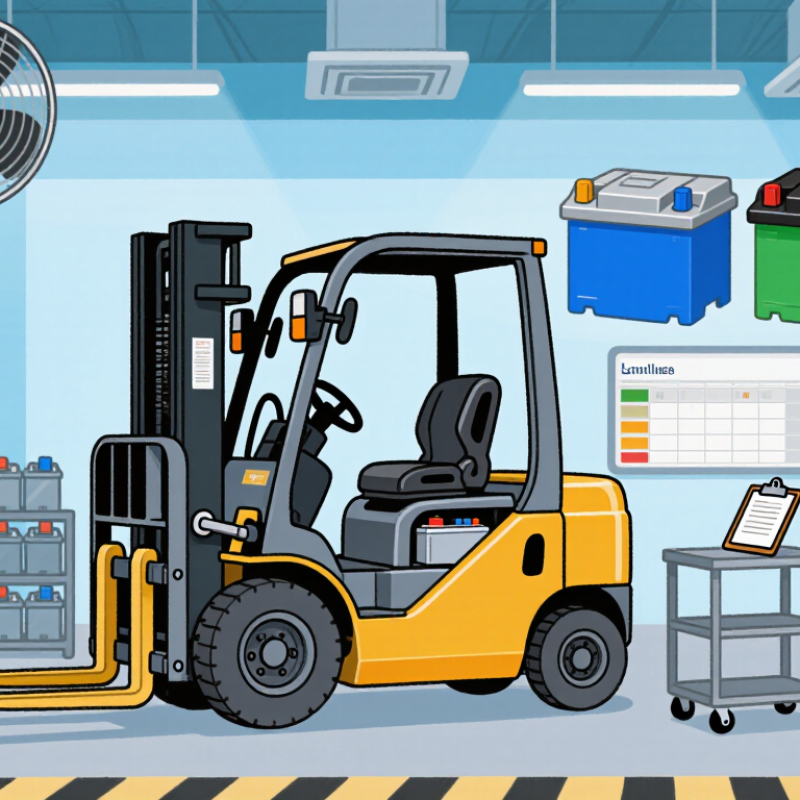
Electric forklift batteries do not all charge the same way. Flooded lead-acid batteries need regular watering and a full charging cycle. Check electrolyte levels according to the battery maker’s instructions, and use distilled water when specified. Never fill above the marked level. These batteries also release gas while charging, so use a designated, well-ventilated area. Keep sparks and flames away.
Lithium-ion batteries usually need no watering and may support opportunity charging during breaks. But that does not make every charger suitable. Match the charger to the battery’s chemistry, voltage, and capacity. Read the battery label and equipment manual before plugging in. A mismatch can cause overheating or damage. Watch for warning lights, unusual heat, or a damaged cable. Stop and report any problem.
A battery’s daily routine matters. For lead-acid units, avoid repeatedly interrupting a charge; allow a full cycle when the work schedule permits. Equalization charging may be needed, but only when the manufacturer calls for it. Let a hot battery cool if its instructions require that. It is easy to assume one rule fits every truck. It doesn’t. Record charge times and note recurring slowdowns; those small details can reveal a battery that needs inspection.
Before charging an electric forklift battery, check its condition and the instructions for its specific type. Look for cracks, swelling, leaks, corrosion, or damaged insulation. Do not charge a battery that appears damaged; follow workplace procedures and have it assessed by qualified personnel. Small checks matter. For serviceable lead-acid batteries, check electrolyte levels only as the manufacturer directs, and use the recommended protective equipment. Keep tools and metal objects away from exposed terminals.
Confirm that the charger is intended for that battery’s voltage and chemistry. Inspect cables, plugs, and connectors for fraying, heat marks, or loose fittings. A mismatched charger can damage equipment or create a hazard. Prepare a dry, well-ventilated charging area with clear access and no unnecessary storage nearby. Keep ignition sources away, particularly where charging may release gas. Keep it clear. Make sure emergency equipment, such as an eyewash station where required, is accessible. Follow site procedures for isolating the forklift and connecting or disconnecting the charger; details can vary by equipment. It is easy to rush this setup when a shift is busy, and that is exactly when a second visual check helps.
Charging an electric forklift battery safely starts before the plug is connected. Park in the designated charging area, lower the forks, apply the parking brake, and switch off the truck. Check the battery case, connector, and cable for cracks, heat damage, or exposed wires. Do not charge a battery that looks damaged; report it and follow site procedures. Small checks matter.
Use only a charger suited to the battery type and voltage. Lead-acid and lithium-ion batteries have different charging requirements, so confirm the equipment manual rather than relying on habit. Keep the area dry, clear of clutter, and adequately ventilated. Wear the protective equipment required at your site, and never force a connector into place. A loose or unusually hot connection deserves attention, not a quick workaround.
Connect the charger as directed, then watch for warning lights or unusual sounds during the cycle. Avoid unplugging it early unless the procedure allows it. Let the battery cool when the instructions require it before returning it to service. It is tempting to treat charging as simple downtime, but rushing a handoff can hide a fault. Record problems clearly, even when the shift is busy.
Typical checkpoints for lead-acid traction batteries: recharge when the state of charge is around 20–30%, and complete a full charge before returning the battery to service. Avoid routinely discharging below approximately 20%. Always follow the battery and charger manufacturer’s instructions; recommendations vary by battery chemistry and model.
A reliable charging routine starts with a simple log. Record the start time, finish time, battery temperature, and any warning lights. Compare each shift’s energy use with the charge added. A battery that repeatedly needs longer charging may need inspection, not another rushed top-up. Small changes matter.
Do not assume every battery follows the same cycle. Check its operating instructions, because lead-acid and lithium batteries can have different charging requirements. Avoid interrupting a cycle unless the battery system allows it. Repeated partial charges may affect some batteries, while planned opportunity charging suits others. The details matter.
Watch for common mistakes: charging a hot battery, ignoring damaged cables, or letting dust collect around connectors. For flooded lead-acid batteries, check electrolyte levels as directed; never apply that step to sealed batteries. Keep the charging area ventilated and free of clutter. It is tempting to trust the charger display as the whole story. It isn’t. A log can reveal patterns, but it cannot replace a physical inspection. If readings look unusual, pause and ask a qualified technician to check the battery and charger before returning them to service.
A forklift battery lasts longer when charging habits match its chemistry and daily workload. Small routines matter: clean connectors, a clear charging area, and a simple record of charge dates. Check cables and plugs for heat, cracks, or a loose fit before connecting. Heat is a warning. Use the charger settings specified for the battery; an incorrect profile can shorten its service life. Allow cooling time when the battery instructions call for it.
Storage is where healthy batteries can quietly deteriorate. Park the truck in a dry, shaded, well-ventilated place, away from standing water and direct heat. For lead-acid batteries, follow the recommended schedule for electrolyte checks and watering. For lithium-ion batteries, use the specified storage charge range rather than assuming a full charge is best. If a truck will sit idle, check charge levels at intervals recommended for that battery type. That interval is easy to forget.
Keep the battery top clean and dry, using an approved cleaning method. Moisture and debris can encourage corrosion or electrical tracking. Record unusual heat, slow charging, or reduced run time, then ask a qualified technician to investigate recurring problems. A shorter shift is not always normal wear; it can be an early warning. I have seen that sign overlooked when a truck still seemed usable. That was a costly lesson.
| No. | Tip | Recommended Practice | Why It Matters |
|---|---|---|---|
| 1 | Use a compatible charger | Match the charger to the battery chemistry, nominal voltage, capacity, and charging profile. Follow the battery and charger instructions. | An incompatible charging profile can cause incomplete charging, overheating, or battery damage. |
| 2 | Charge in a designated area | Use a clean, dry, well-ventilated charging location. Keep flames and sparks away, and follow site requirements for ventilation and protective equipment. | Charging conditions affect safety; some lead-acid batteries can release hydrogen gas during charging. |
| 3 | Allow a full charge when scheduled | For lead-acid batteries, complete the charger’s normal cycle before returning the battery to service. Avoid repeatedly interrupting a cycle unless the battery and charger are designed for that use. | Regular, complete charging helps limit chronic undercharging and its associated loss of capacity. |
| 4 | Avoid unsuitable opportunity charging | Use short, frequent top-up charges only when the battery and charging system are specifically designed for opportunity charging. Follow the manufacturer’s guidance for other battery types. | Charging practices that suit one battery design may shorten the service life of another. |
| 5 | Let the battery cool when needed | After charging, allow a lead-acid battery to cool before heavy use if it is warm. If the battery becomes unusually hot, stop and have it inspected. | Excessive heat can accelerate aging and may indicate a charging or battery problem. |
| 6 | Check water in flooded batteries | For flooded lead-acid batteries, inspect electrolyte levels regularly. Use distilled or deionized water and follow the battery instructions for when to add it; never add water to sealed batteries. | Correct electrolyte levels help protect plates and reduce the risk of damage. Overfilling can cause electrolyte to spill during charging. |
| 7 | Keep terminals and the battery clean | Inspect for corrosion, loose connections, dirt, and damage. Clean only using an approved method, and keep connectors dry and properly secured. | Good connections support reliable charging and help reduce resistance-related heating. |
| 8 | Equalize only when appropriate | Use an equalization charge only for battery types that permit it, typically flooded lead-acid batteries, and only at the interval and settings specified by the manufacturer. | Unnecessary or incorrect equalization can damage batteries that are not designed for the process. |
| 9 | Prepare batteries for storage | Store batteries in a cool, dry, protected area. For lead-acid batteries, start storage fully charged and check charge periodically. For lithium-ion batteries, use the storage charge level specified by the manufacturer. | Self-discharge and unsuitable storage conditions can reduce available capacity or cause lasting damage. |
| 10 | Keep a maintenance and charging log | Record charging dates, inspections, water checks where applicable, unusual heat, and service work. Arrange inspection if performance changes or warning indicators appear. | Records help identify recurring issues early and support consistent battery care. |
Note: Battery designs and site requirements vary. Always follow the battery, charger, and forklift operating instructions.
No. Lead-acid and lithium-ion batteries have different requirements. Check the battery instructions before charging. Habit can mislead.
Park in the designated area, lower the forks, apply the brake, and switch off the truck. Inspect the case, cable, and connector for damage. Small checks matter.
Match it to the battery’s chemistry, voltage, and capacity. Check the label and equipment manual. Do not guess.
Check electrolyte levels as instructed, and use distilled water when specified. Never fill above the marked level. Keep charging in a ventilated area, away from sparks and flames.
Some support opportunity charging, but the battery instructions decide. Use a compatible charger and watch for warning lights or unusual heat.
Avoid interrupting it unless the battery procedure allows it. Some batteries need a full cycle; others may suit planned top-ups. One rule does not fit every truck.
Record start and finish times, battery temperature, and warning lights. Note recurring slow charging. A log helps, but it cannot replace inspection.
Stop charging and report the problem through site procedures. Do not force a connector or use a quick workaround. I used to trust the display too much; that deserves a second look.
Charging an electric forklift battery properly starts with understanding its type, such as lead-acid or lithium-ion, because each has different charging and handling requirements. Before connecting a charger, inspect the battery and cables for damage, confirm that the charger is compatible, and prepare a clean, well-ventilated charging area. Keep the space clear and follow the battery’s operating instructions, using appropriate protective equipment when required.
How to charge an electric forklift battery correctly? Connect it as instructed, select the appropriate charging setting, and allow the cycle to finish without unnecessary interruptions. Monitor charging for unusual heat, odors, or other signs of a problem, and avoid overcharging or letting the battery become deeply depleted. After charging, disconnect it safely and return the forklift to service only when ready. Regularly clean and inspect the battery, maintain its charge according to its chemistry, and store it in suitable conditions to support reliable performance and a longer service life.

Titan Forklift