China Top Used Forklift Buying Guide What to Check?

Time:2026-09-18 Author:Isabella
0%

Buying a used forklift in China is not simply a price comparison. It is a risk assessment involving safety, maintenance, parts, and operating history. The World Industrial Truck Statistics (WITS) reports continued global demand for industrial trucks, increasing pressure on buyers to evaluate older equipment carefully. A low purchase price may hide expensive battery replacement, worn mast rollers, or unavailable controller parts.

What should I check before buying a used forklift? Start with the identification plate, serial number, manufacturing year, rated capacity, and lifting height. Match these details with service records and export documents. Walk around the machine slowly. Check fork heels for cracks, mast chains for uneven stretching, and hydraulic cylinders for fresh oil. Look beneath the chassis after parking overnight. A clean floor is useful evidence. A fresh repaint can also hide damage.

The International Labour Organization and national workplace-safety agencies consistently emphasize inspection, operator competence, and controlled equipment use. OSHA’s powered industrial truck guidance also highlights pre-use inspections and removing unsafe trucks from service. These principles remain practical when sourcing Chinese used forklifts. Test the machine cold, not after the seller warms it. Listen for transmission noise, steering play, and uneven braking. For electric models, inspect battery voltage, connectors, charging history, and visible cell corrosion. For diesel models, examine smoke color and engine start behavior. Experienced buyers still miss small warning signs. That is why an independent technician should perform a documented load test before payment. The perfect used forklift rarely exists. A transparent inspection record matters more than glossy paint.
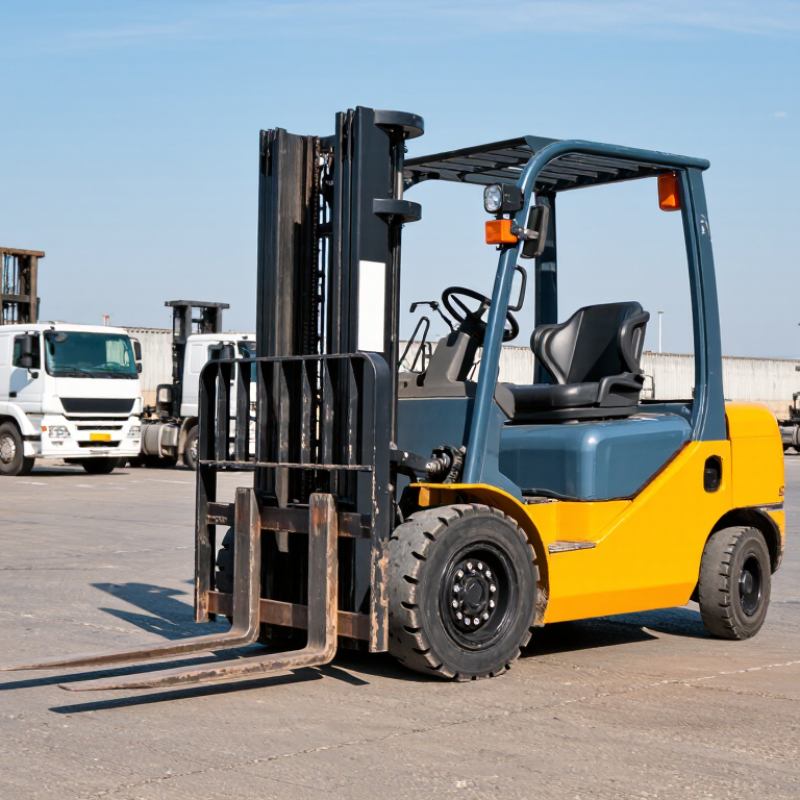
China Top Used Forklift Buying Guide What to Check?

Define Your Used Forklift Requirements and Operating Conditions

Before buying a used forklift, define the work it must perform every day. Record your heaviest load, average load, lifting height, and load dimensions. A 2.5-ton rating may not cover a tall, unstable load. Check the capacity plate and load chart carefully. Measure aisle widths, doorway heights, floor slopes, and storage rack clearances. A narrow aisle changes the required turning radius.

Think about the operating environment, too. Indoor warehouses usually need low-emission power and quiet operation. Outdoor yards may require stronger tires, weather protection, and reliable cold-start performance. Dust, moisture, uneven ground, and long shifts will affect maintenance needs. Battery forklifts need charging space and healthy batteries. Fuel-powered units need clean exhaust systems and regular fluid checks.

Speak with operators before inspecting the machine. Their comments can reveal steering looseness, poor visibility, or uncomfortable controls. During a test drive, lift a known load, brake on a safe level surface, and listen for hydraulic noise. Inspect forks for cracks, heel wear, and uneven tips. Review service records, but do not trust paperwork alone. A polished machine can still hide expensive faults. I once focused too much on engine hours and overlooked a damaged mast roller. That mistake changed my inspection routine. Leave room for doubt. A used forklift is not only a purchase; it must fit your people, floor, schedule, and actual workload.

China Top Used Forklift Buying Guide: What to Check?

Define Your Used Forklift Requirements and Operating Conditions

Choose the forklift capacity according to the heaviest load, load center, lift height, aisle width, floor condition, operating hours, and indoor or outdoor use. The chart shows common nominal capacity classes converted from metric tonnes to kilograms.

Before buying, compare the forklift data plate with your real operating requirements. Confirm that the rated capacity remains sufficient at the required lift height and load center, then inspect the mast, forks, chains, hydraulics, brakes, steering, tires, battery or engine, safety devices, and maintenance records.

Check the Forklift’s Main Specifications and Load Capacity

China Top Used Forklift Buying Guide: What to Check?

Check the forklift’s rated capacity, load center, and maximum lift height before discussing price. A 3-ton rating may apply only at a standard load center. Capacity can drop when the mast rises or an attachment extends forward. Read the capacity plate carefully. OSHA’s Powered Industrial Trucks standard, 29 CFR 1910.178, requires capacity markings to remain clear and understandable. OSHA also cites about 85 forklift-related fatalities and 34,900 serious injuries annually. These figures make specification checks more than paperwork.

Inspect the mast, forks, chains, hydraulics, tires, brakes, and steering. Look for uneven fork heels, leaking cylinders, cracked welds, or slow lifting. Check the serial plate, operating hours, mast type, lift height, fuel system, and battery condition. Hour meters can be replaced. Do not trust them alone. A clean frame may still hide worn pins or weak hydraulic pressure. Ask for service records, then compare the machine’s actual performance with its rated data. ISO 3691-1 safety requirements also support careful inspection of stability, controls, and operating conditions.

Tips: Measure your heaviest pallet and its center of gravity. Test the forklift with that load, at the required height. Keep the load low during travel. Ask a qualified technician to inspect brakes, forks, mast components, and hydraulics. A short test drive is useful, but it cannot replace a documented inspection. Examine the capacity plate again after installing any attachment.

Inspect the Engine, Hydraulics, Mast, Forks, and Tires

When buying a used forklift in China, inspect it under working conditions, not only in a sales yard. Ask for maintenance records, but verify them against engine hours and physical wear. Start the engine cold. It should start without heavy smoke, unusual knocking, or unstable idling. Check the oil level and coolant condition. Milky oil may indicate internal damage. A clean engine is useful, but fresh washing can hide leaks.

Test every hydraulic function with a rated load. The lift should rise smoothly and hold its position for several minutes. Look closely at hoses, fittings, cylinders, and the floor beneath the machine. Small oil stains deserve attention. Inspect the mast rails, rollers, chains, and welds for cracks or uneven movement. Lower the mast slowly; sudden dropping is a serious warning. Check the forks for bends, thinning heels, deep grooves, and uneven tips. Measure them if possible. Forks can look strong but remain unsafe.

Inspect all tires for cuts, missing rubber, sidewall damage, and uneven wear. Solid tires may hide internal separation. Pneumatic tires need correct pressure. Drive, steer, and brake on a flat area. Listen for axle noise and test the parking brake. I would also compare the machine’s capacity plate with the seller’s description. Mistakes happen, even during careful inspections. Bring an experienced technician when the inspection feels uncertain. Photographs and a written checklist can prevent overlooked defects.

China Top Used Forklift Buying Guide What to Check? – Inspect the Engine, Hydraulics, Mast, Forks, and Tires

Inspection Area What to Check Practical Inspection Method Acceptable Condition Warning Signs Recommended Buying Decision
Engine – Cold Start Starting performance, cranking speed, idle stability, and unusual noise Inspect and start the forklift with the engine cold. Ask the seller not to warm it up beforehand. Starts without excessive cranking; idle becomes stable after warm-up; no persistent knocking or rattling. Hard starting, heavy vibration, loud knocking, or an engine that is already warm when inspected. Proceed only after a qualified technician identifies the cause and repair cost.
Engine – Exhaust and Blow-by Exhaust color, smoke density, and crankcase pressure Observe exhaust at start-up, idle, and under load. With the engine warm, inspect excessive vapor or pressure at the oil filler opening without placing hands near moving parts. Brief light smoke during cold start may occur; exhaust should become reasonably clear at normal temperature. Persistent blue smoke, thick black smoke, white smoke after warm-up, or strong crankcase pressure. Negotiate only after compression, injector, turbocharger, or coolant-system testing.
Engine – Fluids and Leaks Engine oil, coolant, fuel system, hoses, belts, and seals Check fluid levels and condition before operation. Look beneath the forklift after running and inspect hoses for swelling, cracking, or wetness. Correct fluid levels, no oil-coolant mixing, no active fuel leak, and only minor dry seepage if permitted by site policy. Milky oil, oily coolant, fuel odor, active drips, damaged belts, or repeatedly low fluid levels. Do not accept active fuel, coolant, or hydraulic leaks before repair.
Hydraulic System – Lift and Tilt Lift speed, tilt response, smoothness, and load-holding ability Operate all hydraulic functions with the rated or approved test load in a safe area. Hold the controls briefly and observe drift. Smooth movement without jerking; no abnormal noise; the system holds the load without rapid uncontrolled lowering. Slow lifting, hydraulic chatter, excessive mast drift, sudden movement, or oil leaking from cylinders and hoses. Require a hydraulic pressure and leakage test against the forklift’s service specification.
Hydraulic System – Oil and Components Hydraulic oil condition, pump, valves, hoses, and fittings Check oil level and appearance; inspect hose bends, fittings, valve blocks, and pump housing for wetness or abrasion. Oil is clean and at the specified level; hoses are flexible and protected; fittings are dry and secure. Foamy or contaminated oil, hose bulges, exposed reinforcement, damaged fittings, or pump whine. Replace damaged pressure hoses before operation; avoid temporary patch repairs.
Mast – Rails and Welds Mast channels, welds, rollers, pins, and structural alignment Raise and lower the mast through its full travel without a load, then inspect both sides for cracks, distortion, unusual clearance, and damaged welds. Rails are straight; welds show no cracks; rollers track correctly; movement is even on both sides. Cracked welds, bent rails, metal flakes, uneven movement, excessive side play, or impact damage. Reject until inspected and approved by a competent lifting-equipment specialist.
Mast – Chains and Carriage Lift chains, anchor points, chain guards, carriage, and attachments Inspect chain links for rust, cracked plates, stiff joints, corrosion, and unequal tension. Check carriage stops and attachment locks. Chains are lubricated, evenly tensioned, free from damaged links, and correctly secured; attachments lock positively. Stretched or rusty chains, missing pins, damaged anchors, uneven chain tension, or loose carriage components. Replace or professionally assess damaged chains before purchase or use.
Forks – Blades and Heels Fork blade thickness, heel wear, straightness, and surface cracks Measure thickness at the heel and compare it with the original manufacturer specification or fork marking. Inspect the underside and heel for cracks. Both forks are straight, matched, securely mounted, and within the permitted wear limit; no cracks or severe deformation. Heel wear of 10% or more, visible cracks, bent tips, sharp gouges, unequal fork heights, or unauthorized welding. Remove from service and replace if the applicable wear limit or inspection requirement is exceeded.
Forks – Positioning and Locks Fork locking pins, heels, spacing, and side-to-side movement Move each fork along the carriage and engage the locking pin in several positions. Check for excessive looseness. Forks slide correctly, lock securely, and remain aligned during lifting and travel. Missing or seized pins, excessive play, damaged hooks, or forks that can move without deliberate release. Repair the locking system before any load-handling test.
Tires and Wheels Tread, chunking, cuts, flat spots, sidewalls, rims, and wheel nuts Inspect all tires visually and measure pneumatic-tire pressure with a gauge. Check solid tires for chunking and flat spots; inspect rims and wheel fasteners. Tires are matched by type and size, evenly worn, correctly inflated where applicable, and free from exposed cords or serious damage. Exposed cord, deep cuts, severe chunking, large flat spots, damaged rims, loose wheel nuts, or mismatched tire sizes. Replace unsafe or badly mismatched tires before delivery.
Brakes, Steering, and Parking Brake Service brake, parking brake, steering response, and travel control Test forward and reverse at low speed in a clear area. Apply the service brake gradually and verify the parking brake holds the stationary forklift. Straight-line braking, predictable steering, no excessive free play, and secure parking-brake holding. Pulling to one side, grinding, delayed braking, steering looseness, or parking-brake slippage. Do not operate until the braking or steering fault is corrected.
Safety Equipment and Controls Seat belt, horn, lights, warning devices, overhead guard, and emergency controls Operate every control and inspect the overhead guard, load backrest, seat belt, data plate, alarms, and lighting. All safety devices function; protective structures are undamaged; capacity and warning labels are legible. Missing seat belt, cracked overhead guard, defective horn or alarm, unreadable capacity plate, or bypassed interlock. Reject for commercial use until safety defects are repaired and verified.
Operating Test and Records Rated-capacity behavior, service history, operating hours, and inspection records Perform a controlled test with an appropriate load. Compare the hour meter with maintenance records, repair invoices, and previous inspection reports. Stable handling, predictable travel, consistent lifting, traceable maintenance, and documentation that matches the machine. Unverified hours, missing records, inconsistent serial information, unstable load handling, or repeated major repairs. Buy only after an independent pre-purchase inspection and a written repair-cost assessment.
Inspection note: Always follow the forklift’s capacity plate, maintenance manual, applicable local regulations, and the inspection requirements used at the intended worksite. Load testing and pressure testing should be performed by trained personnel using suitable equipment.

Verify Maintenance Records, Safety Compliance, and Ownership History

China Top Used Forklift Buying Guide: What to Check?

Maintenance records should match the forklift’s serial number, hour meter, and service dates. Look for inspection sheets, hydraulic repairs, brake work, battery replacement, and mast servicing. OSHA estimates that forklifts cause about 35,000 serious injuries and 85 fatalities annually in the United States. This figure makes skipped maintenance a serious purchasing risk. Check the machine cold. Start it yourself. Listen for uneven engine noise and test the brakes on a clear surface.

Safety compliance needs physical verification, not paperwork alone. Confirm the load-capacity plate is readable and matches the configuration. Inspect the seat belt, horn, lights, reverse alarm, forks, chains, tires, and overhead guard. OSHA’s Powered Industrial Trucks guidance emphasizes operator training, daily inspections, and safe capacity limits. Attachments can change stability. A forklift may look strong but still have worn lift chains or distorted forks.

Ownership history can reveal hard use. Ask whether it worked in warehouses, ports, construction, or outdoor yards. Request accident records, ownership transfers, rental history, and proof of authorized repairs. A fresh repaint may hide impact damage. Missing documents are not automatically proof of abuse, but they deserve careful reflection. An independent technician should measure fork thickness, mast movement, tire condition, and hydraulic pressure. The inspection costs less than discovering a structural defect later.

Compare Prices, Test Performance, and Complete the Purchase Safely

When comparing used forklifts, do not trust a clean paint job. Ask for service records, hour-meter history, load capacity, mast height, and battery age.

Prices vary sharply by lift capacity, fuel type, operating hours, and repair history. Compare at least three listings with similar specifications.

Calculate the real cost, including transport, tires, battery replacement, inspection, and possible hydraulic repairs.

The cheapest machine may become the most expensive one.

Test performance on a dry, level surface. Check cold-start behavior, brake response, steering play, mast alignment, chain wear, hydraulic leaks, and warning alarms.

Lift a rated load slowly. Watch for mast drift or unusual vibration.

OSHA estimates that forklifts cause about 85 workplace deaths and 34,900 serious injuries in the United States each year.

About one-quarter of these deaths involve overturns, according to OSHA’s powered industrial truck safety data.

Small defects matter.

Use a qualified technician for the final inspection. Ask for a written condition report and verify the serial number against available records.

Confirm that the proposed attachment matches the truck’s capacity plate. ISO 3691-1 provides safety requirements for industrial trucks, but compliance still needs practical checking.

A professional inspection can expose hidden damage. I once saw a seemingly smooth lift fail a brake test after warming up. That mistake was preventable.

Never pay the full amount before testing, reviewing documents, and agreeing on delivery responsibilities.

FAQS

How should I define my used forklift requirements?

Record the heaviest load, average load, lifting height, and pallet dimensions. Measure aisle widths and doorway heights. A narrow aisle needs a smaller turning radius. Do not guess.

Does a higher capacity rating always make a forklift safer?

No. Capacity depends on load center, lift height, and attachments. A tall load can become unstable. Check the capacity plate and load chart carefully.

What workplace conditions should influence my choice?

Indoor warehouses may need quiet, low-emission operation. Outdoor yards may need stronger tires and weather protection. Dust, moisture, slopes, and long shifts increase maintenance demands.

What should I check on the forks and mast?

Look for cracked forks, worn heels, uneven tips, damaged rollers, and leaking cylinders. Watch for slow lifting. Small defects can become costly problems.

How can I test a used forklift before buying it?

Lift a known load to the required height. Drive slowly on a safe, level surface. Test the brakes and steering. Listen for hydraulic noise. Keep the load low while traveling.

Can I rely on the hour meter and service records?

No. Hour meters can be replaced, and records may be incomplete. Compare paperwork with wear on pedals, forks, tires, and controls. A polished machine can still hide faults.

What should I consider when choosing battery or fuel-powered equipment?

Battery models need suitable charging space and healthy batteries. Fuel-powered models need clean exhaust systems and regular fluid checks. Your shift length matters. So does ventilation.

Should operators participate in the inspection?

Yes. Operators may notice loose steering, poor visibility, or uncomfortable controls. Their daily experience adds useful evidence. I once focused too much on engine hours and missed a damaged mast roller. That mistake changed my inspection routine. Leave room for doubt.

Conclusion

Buying a used forklift requires more than comparing advertised prices. First, define your lifting needs, load weights, working height, fuel or power preference, operating environment, and expected working hours. What should I check before buying a used forklift? Start with its rated capacity, lift height, dimensions, turning radius, hours of use, and overall specifications to ensure they match your application. Avoid choosing a machine that is too small for the workload or unnecessarily large for the workspace.

A careful physical inspection is essential. Check the engine or battery system, transmission, hydraulics, mast, chains, forks, steering, brakes, lights, seat belt, and tires for leaks, cracks, unusual noise, or excessive wear. Request maintenance records and confirm ownership details, service history, safety inspections, and available documentation. Before completing the purchase, compare similar machines, arrange a practical test under load, evaluate starting, lifting, braking, and steering performance, and clarify the warranty, payment terms, delivery arrangements, and final condition in writing.

Isabella

Isabella

Isabella is a dedicated marketing professional with a sharp focus on driving brand growth and engagement through strategic content creation. With an extensive background in digital marketing, she combines her passion for storytelling with her keen understanding of industry trends to deliver......